
By Nanette Ashby
Every fourth search request entered into Google is linked to pornographic content and makes up a third of all internet traffic. Every month, Netflix, Amazon and Twitter combined receive fewer visitors than pornographic websites (Lust). Evidently, just like sex is fundamental for the human experience, so is pornography a part of everyday life. Regardless of the medium or time period, pornography functions as a transmitter of societal ideas and values. A newly emerging genre is feminist pornography, which intentionally uses this opportunity, by infusing feminist ideology into the films. It promotes authentic pleasure and provides diverse and inclusive representation. This also rings true historically, as proven by the existence of sexually explicit art from the Edo Period in Japan, called shunga. These woodblock prints, illustrated books, and scroll paintings are known for their exaggerated genitalia, humour and diversity in styles and subject matter. These media are the most common examples of shunga, but ceramics and netsuke (carved toggles) have also been discovered (48).This article examines if shunga fall into the newly established genre of feminist pornography from a 21st century consumer’s point of view.
Shunga is just one of many terms used for the sexually explicit art prints of the Edo period (1600-1868). But to simplify and connect academic work, the term shunga is now used internationally (Boyd 50). It functions as a collective term to envelop a big diversity of works of art spanning across different centuries, cities, schools, and styles (49). Shunga encompasses many variations “from the projecting sense of serious wonder of the early works, to a playful, sometimes satirical parody, to a gothic that showed darker aspects of human behaviour and sometimes the supernatural” (Wattles 470).
Even though it is tempting to assume a linear progression of the depiction of sex throughout Japanese art history, this is not the case (52). Previous works of art rendering sexually explicit content, spoke to a different audience and prioritised humour over eroticism, which is exemplified in scrolls depicting phallic contests and fart battles (52). The Edo period specifically was characterised by an acknowledgement that sex was a natural part of life. Hence it was possible for sex to become a frequent motif in art. The existence of “an unofficial tolerance for pictures and stories featuring the libidinous economy” encouraged all leading print artists to make shunga part of their repertoire leading to up to a quarter of their work consisting of it (Wattles 470; Boyd 60). The majority of shunga were created by artists of ukiyo-e, pictures of the floating world, such as Suzuki Harunobu (1725-1770), Kitagawa Utamaro (1753-1806) and Katsushika Hokusai (1760-1849) (49). But when Japan opened up to international trade in the Meiji era (1868-1912), it also opened itself up to European influences, marking the end of the liberal distribution of shunga. The Meiji era (1868-1912) marks the end of the liberal distribution of shunga. The production gradually dissipated until around 1900. For instance, artists Kawanabe Kyosai (1831-1889) and Tsukioka Yoshitoshi (1839-1892) were part of both eras and continued supplying sexually explicit art throughout the Meiji period (52).
Fast forward to the beginning of the 21st century when the film genre feminist pornography which focuses on providing a sex-positive, progressive, and ethical alternative to rival mainstream pornography is blossoming and all types of pornography are predominantly consumed online. It is also referred to as ethical porn or indie adult cinema. This type of porn “is devoted to social justice and gender equality whilst empowering the performers producing it and the people consuming it” (Ashby, “Important”). The main goal is to provide a gender equal alternative by focusing on female pleasure and illustrate that sex is a normal and healthy part of life. By creating a positive and gender equal representation of bodies and sexual encounters, feminist porn creates healthier and more gender equal relationships.
The passionate debates characterising the sex wars of the 1980s were the birthplace of feminist pornography. The anti-pornography movement of the 1970s and 80s was the cause of the heated disputes within the feminist community in America, as pornography at the time was derogatory and harmful for women (DeCesare). As an alternative to banning pornography, feminist pornography was supposed to inspire women to cultivate their freedom and equality by exploring their sexuality and pleasure. Another twenty years passed before feminist porn grew into a genre of its own.
It is noteworthy that, according to Boyd, pornography hasn’t been proven to be harmful in and of itself. Stating that feminist porn is considered a positive alternative does not mean that porn that does not fall into this category is automatically damaging. But, porn does play a central role in shaping attitudes and gender norms outside the home, a role that feminist pornography fulfills ethically.
Generally, the definitions of Webb are used to define pornography as the intense representation of sexual acts refusing any aesthetic or sociological justification and challenging the standards of decency (38). But a vital component of feminist pornography is the aesthetic value. Consequently, it would be considered erotic art based on Webb’s definitions: “Art on a sexual theme related specifically to emotions rather than merely actions, and sexual depictions which are justifiable on aesthetic grounds” (Webb 2). Webb concedes that sexually explicit artworks usually originate from a general urge to document all parts of life. The primary goal of pornography is arousal, whereas for erotic art it is secondary. Both feminist porn and shunga share characteristics of art including artistic skills, beauty, capturing life and expression of ideas or experiences of the artist (30). Therefore, shunga will be considered pornography with characteristics of erotic art in this article because just like art, “pornography can have more than one intention, such as artistic, educational, humorous, political, or social commentary, and arousal need not be the only one” (32).
When interpreting images or artifacts pertaining to sex, sexuality, and gender expression there is a significant risk of misunderstanding historical images by applying modern ideas, concepts, and terminology. Any epistemologies of sex have to be adjusted to the period in question (Berry 7). It is impossible to say for certain how earlier viewers experienced these images, especially when considering “additional complexities of interpreting sexual themes and practices in foreign cultures” (7). Thus, trying to assume how shunga was read in the 19th century from a European standpoint is a problematic endeavour and impossible to confirm (7). However, that does not forbid the contemporary viewer from applying a feminist lens to their own experience of shunga in the 21st century.
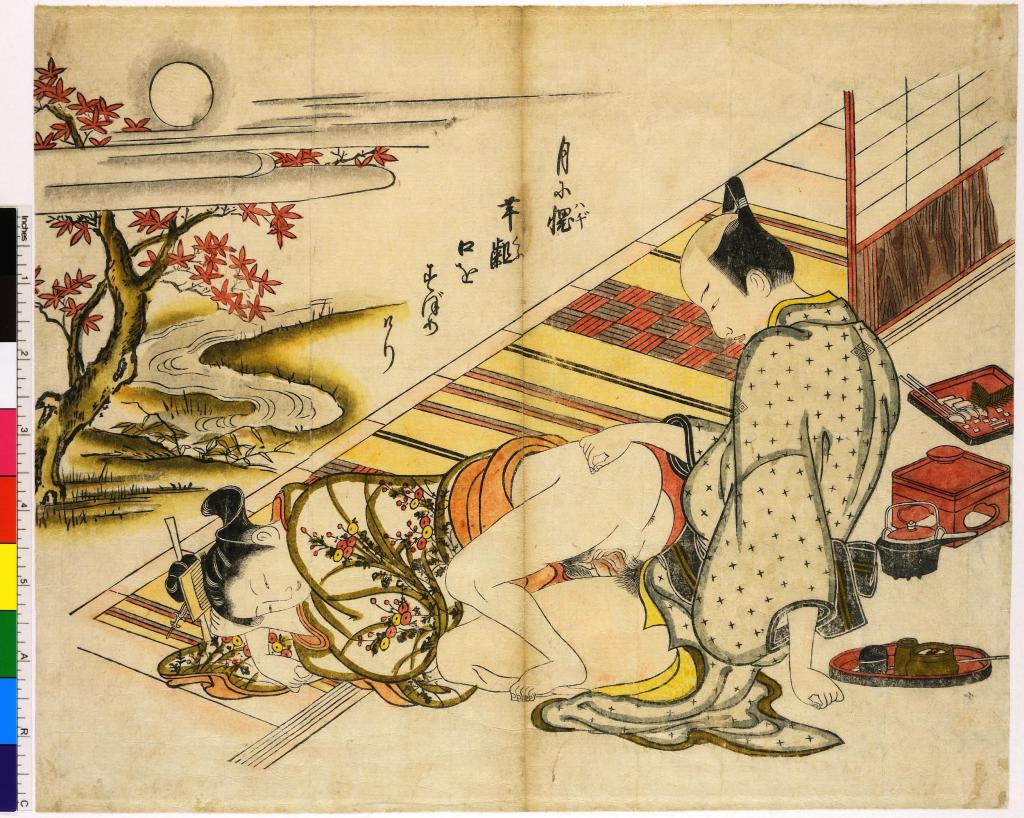
Only due to a unique combination of conditions was the popularity of shunga possible: the increase of basic levels of education, the rise of printing and most significantly the new libidinous and economic structures of the growing cities of Osaka and Edo following the seventeenth century (Boyd 52). The manner of production did not adapt significantly for the change in motif. The same artists, wood carvers, printers, publishers, and distributors were involved. Even the audience itself stayed the same (60). In contrast to most feminist pornography, the creation process of shunga was comparable to a production line rather than a community effort. In terms of production, the essential component of Feminist Porn is the guaranteed safety and dignity of performers. It is often described as ethical porn due to the symbiotic production process between directors, producers, and performers, which has a fair and respectful exchange at its core. I have found no mention of models or performers being used as inspiration for the artists creating shunga. Thus, even though the production between shunga and feminist porn differs significantly, since no sex workers were harmed or directly involved in the production one could consider shunga at least an ethical way of producing pornography.
Since pornography is nowadays freely available online, it serves as a common source of sex education. On average a young person encounters explicit adult content by eleven years of age. The main message conveyed is that women are objects and men function as “some kind of penetrating sex machine” (Lust). Insufficient sex education in schools around the world, combined with families that don’t fill the gap of education, leaves the internet as the only option for many young people. Pornography usually depicts a highly curated fantasy that do not represent authentic encounters. At worst, scenes of rape or sexual abuse are readily available. Feminist porn strives to provide a gender equal alternative. In contrast with mainstream porn, feminist porn ensures its ethical production by hiding behind a paywall. It might not be readily available for children, but for adults it can provide a source of information and inspiration.
The discussion of providing sex education in Japanese schools only arose in the early 20th century, similarly to many European countries. “Manuals relating to contraception and sexual hygiene were written in the Edo period but they are entirely different from the genre known as shunga” (Boyd 70). However, shunga was readily accessible through lending libraries or cheaply available depending on its quality and “should not be dismissed as low art” (68). Shunga catered to a wide range of tastes, narratives, and styles. The assumption is that it was predominantly used by men. Some shunga show women and couples looking at shunga together, but this cannot be considered reliable confirmation. A basic level of literacy was a requirement to fully enjoy the art and humour of shunga. “Intertextuality, wordplay, puns, symbolism and witty references commonly featured in ukiyo-e and shunga was no exception” (68). Shunga were collectable items and frequently sold as sets or books. These prints were “included in the bride’s trousseau, ostensibly to educate the young newlywed”, but this purpose and educational value is debatable (70). Both shunga and feminist pornography cater to a diverse audience, have the potential to be used with a partner, and could possibly be educational.
The most significant difference between feminist pornography and mainstream pornography is the equal and unapologetic representation of all races, genders, sexualities, and body types, whereas mainstream pornography often shows stereotypical depictions of gender, over-fetishization of body types and ethnicities, or derogatory behaviour towards certain groups. There are clear role allocations by a dichotomous gender division. If, for example, the woman’s role is taught to be limited to providing pleasure to a man, repeated enough, female pleasure will vanish from public perception, emanating through the viewer’s actions over time. This is an example of how porn has the power to shape the viewer’s perspective.
What is true for gender, is true for many minorities be it black, Asian, Muslim, gay or trans individuals. Because of the lack of inclusive sex education in schools, mainstream pornography is often the primary source of information for LGBTQIA+ youth. Mainstream gay porn contains homophobic and derogatory rhetoric, which causes significant damage to the young person’s self-image and future sexual experiences (Ashby, “Solution”). In response to this, Erika Lust asserts that the “sex can stay dirty, but the values have to be clean” (Lust). Since porn is regularly accessed by large parts of the population, it has the opportunity to imprint the values it contains on the viewer, be it good or bad. This is a reason why alternative pornography fights this lack of positive representation through diverse casting and situations. Especially in the context of feminist porn, “representation refers to the act of making present what was absent” (Buikema 83).
Shunga is known for its diversity in the scenarios and the people depicted, such as courtesans and their work, or domestic scenes of a variety of Japanese inhabitants. Even though shunga portrays graphic sexual acts, courtesans were an uncommon topic. “When courtesans do appear in shunga they tend to be depicted with their secret or true love rather than a client” (Boyd 58). The domestic scenes make up the majority of shunga, showcasing “husbands and wives, insatiable widowers, adulterers, young or old lovers, chonin (townspeople), ladies-in-waiting, and even foreigners” (58). The variety of sexual partners, situations, sexual positions, and locations was needed to keep consumers interested. The diversity in representation cannot be considered an authentic reflection of sexual practices during the Edo period, however “sexual desires that perhaps could not be satisfied in actuality could be represented in shunga as it provided a safe space to explore these issues and satisfy desires mentally” (68).

The main reason shunga could be considered feminist is the amount of art works depicting male-male and female-female relations. During the Edo period male-female and male-male relationships were “not considered mutually exclusive and there was a fluidity of sexuality that allowed for participation in both” (59). This is reflected in the lack of visual or stylistic differences. Since nanshoku (male-male relationships) were distributed alongside nyoshoku (male-female relationships) for example as part of sets, illustrated books or scrolls, it is possible to assume nanshoku “was given equal status” (59). This is assumed to not be the case for female-female relationships due to significantly fewer examples surviving and being preserved (59).
Another element on which to compare feminist porn and shunga, lies in the representation of diversity in body shapes and sizes. However, this representation in shunga challenging to identify. In shunga, the bodies of the participants are mostly covered by Kimono, only exposing the exaggerated genitals. This purposely focuses the eye on the sexual act (54). Body shapes are difficult to identify, but it is unlikely there was a purposeful diversity displayed. Subsequently, the objectification of women’s bodies does not occur in the manner it does in today’s mainstream pornography. Genitals could be the same size as the participants’ heads, which implies “that the physical and emotional aspects of sex were as important as the physical ones” (56). An argument could be made that due to the oversized genitalia, both male and female bodies were reduced to their sexual organs. Diversity in race and ethnicity is not discussed in the sources used for this article. As mentioned before, foreigners were depicted, but it is not specified what ethnicity the foreigners belonged to.
The presence of the gaze within visual culture “points to the interplay between looking and being looked at” (267). The term Male Gaze was first coined by John Berger in the book Ways of Seeing to describe the sexual objectification of women within art and advertising (Buikema 196). Freud associates the gaze with scopophilia, the pleasure of looking, and Lacan with psychoanalytic vision which considers the gaze as a relation, instead of an act itself by putting “the subject within a field of desire” (267). Feminist film theory of the 1970s reconfigured the term to describe the specifically male gaze aimed to objectify women. “Because the camera looks along with the male character, the viewer is invited or rather forced to adopt a male position” (Buikema 197). In all forms of visual media, the male gaze is omnipresent. With mainstream pornography, the gaze is inextricably linked. The female gaze was created as an alternative. In the case of feminist pornography, this translates to adult films made by women from a female perspective for a predominantly female audience. At the heart of the female gaze lies the representation of authentic female pleasure.
Since shunga was exclusively produced by male artists, it is assumed that it was for a male audience to use for masturbatory purposes (Boyd 62). Even though this is still heavily debated, there is the possibility that women were also consumers of Shunga (Wattles 470). The textual and visual accounts showing women using Shunga provide the possibility that it is “plausible women would have at least been aware of shunga and had probably handled it” (Boyd 62). This is further suggested by the existence of parodies of shunga in textbooks and novels for women, suggesting that women used parody as a means to gain access to the enjoyment that shunga offered (Wattles, 471).
It is easy to assume that shunga was exclusively made for the male viewer and thus prioritized the depiction of male over female pleasure. However, female pleasure was equally represented within shunga. Closed eyes, curled toes, dishevelled hair, head thrown back and sexual fluids are common illustrations of female pleasure in shunga (56). The framing of the shunga usually does not favour one or the other participant, like in mainstream porn. Furthermore, while elements of shunga can be similar to mainstream porn, a of close-up depiction of a vulva does not necessarily indicate a strong male gaze.
Can we therefore assume that, according to the ratio of male and female pleasure depicted, shunga is comparable to feminist porn? As discussed previously, shunga cannot be interpreted as true and will most likely be based on the gender inequalities throughout all parts of Japanese life of the Edo period. It is therefore unlikely that female pleasure was considered equal to male pleasure as is the case with feminist porn (56). It does, however, have clear differences with European erotic art of that same age. Some shunga are accompanied by text which provides context to the scene depicted, such as relationships between the individuals depicted or other background information to support the scenario. Often the text translates to dirty talk or cries of pleasure as well (56). Adding in a layer of emotions to the physical act helps the viewer connect with the shunga and sidesteps the “reduction solely to the physical as in most European female nudes” (56). However, the denail of the representation of female pleasure in shunga could be proof of lingering prudish attitudes of the West (Wattles 470).
Pleasure created by pornography is not limited to orgasms. “Pornography can be appreciated as a means of arousal and art at the same time” (Kieran). The genre feminist porn is often celebrated for its outstanding cinematography by film festivals and academic institutions. Four Chambers, a feminist porn production company, for example specialises “in highly-stylised erotic shorts” through which they examine “sexuality with a keen eye for aesthetics” (Ashley). Symbolism, colours, textures, and nature are used to emphasize sex and pleasure. Depth is created through intertextuality and by “leaving more space for imagination to create the rest of the narrative, subjective to each viewer” (Ashley). Feminist porn demonstrates that porn can be sexually pleasing and aesthetically stimulating at the same time.
Shunga are considered to have been very popular and commercialised works of art since it did not deviate from the general aesthetic of ukiyo-e but showed great amount of creativity and skill (Wattles 473). Likely only a fraction of the amount of shunga which was in circulation survived. As Boyd establishes, shunga “depicted inventive positions, lavishly decorated kimonos and beautiful people. They could express a whole gamut of moods and emotions including pleasure, passion, amusement, anger and tenderness” (Boyd 67). It is possible to presume that shunga were consumed, enjoyed and considered art (67).
To summarise, shunga and feminist porn act as a means of sexual expression celebrating human desire, sensuality, and pleasure. The foundation of both is the humanization and normalizations of sex. Yet, shunga was a product of its time, potentially reflecting some of the social norms and attitudes of the Edo period. Whereas feminist pornography is a contemporary movement rooted in Western societies, addressing issues of gender equality, consent, and diversity. As Erika Lust reiterates; “It’s not only about empowering women, it’s about empowering everyone” (Lust, Loots). Both operate in between the definitions of art and pornography. Missing in shunga is the female gaze, which is an essential part of feminist pornography. It does not exist within the genre of shunga to the same extent since they were exclusively created by male artists. But shunga and feminist pornography share many similarities. Viewed from a Western consumer’s perspective in the 21st century, both provide a diverse representation of people, sexualities, and situations, showcase female pleasure and could on the surface be mistaken for feminist pornography. Both attract a wide and diverse audience, can be used with one of more partners and have the potential to be educational. However, for all its similarities, the different historical and cultural contexts cannot be overlooked, as seen clearly in the process of production. Because the production process of shunga did not harm anyone, it could be recognized as ethical porn. On the other hand, it completely lacks the community essence required and celebrated in feminist pornography. Additionally, since shunga themselves cannot be trusted as primary sources, it is unclear if the ideas and sentiments displayed reflect reality of the Japanese viewers at the time. It is unlikely that the ideas behind feminist pornography did exist during the Edo period. At a stretch, shunga could be considered an early precursor by reflecting equality of pleasure and diversity in representation.
References
Ashby, Nanette. Why is feminist pornography important? Raffia Magazine, 21.04.2021.
Ashby, Nanette. Feminist porn is not the solution. Raffia Magazine, 05.09.2021.
Ashley, Vex, Erika Lust. Vex Ashley: A Four Chambered Heart. Erikalust.com, 16 March 2015. https://erikalust.com/vex-ashley-a-four-chambered-heart/  
BBC Three. The Porn Star Feminist: What I Wish I’d Known About Porn. The Narrative, 23.05.2018. https://www.youtube.com/watch?v=pPskxt6sgmQ 
Berry, Paul. Rethinking “Shunga”: The interpretation of Sexual Imagery of the Edo Period. Archives of Asian Art, Vol. 54, 2004, pp.7-22.
Boyd, Anne Louise. Art, Sex, and Institutions: Defining, Collecting, and Displaying Shunga. College of Arts, University of Glasgow, 2016. http://theses.gla.ac.uk/7546/
Buikema, Rosemarie, Liedeke Plate, Kathrin Thiele. Doing Gender in Media, Art and Culture Book, A Comprehensive Guide to Gender Studies. Second Edition, London and New York, Routledge, 2018.
DeCesare, Michael. Battling Pornography: The American Feminist Anti-Pornography Movement, 1976-1986. Social Movement Studies, Vol 14, No.5, Department of + Sociology, Merrimack College, North Andover, Massachusetts, USA, 2014.
Hockley, Allen. Review. Monumenta Nipponica, Vol. 69, No.1, Sophia University, 2014, pp.132-136. https://www.jstor.org/stable/43864640
Kieran, Mathhew. Pornographic Art. Philosophy and Literature, Volume 25, Number 1, The Johns Hopkins University Press, April 2001.
Lust, Erika. It’s time for porn to change | Erika Lust | TEDxVienna. Tedx Talks, 03.12.2014. https://www.youtube.com/watch?v=Z9LaQtfpP_8 
Lust, Erika, Erik Loots, Linda Vermaat. Erika Lust – Fix The World and Make Money – Documentary. Twentie Four, 24.10.2018. https://www.youtube.com/watch?v=LQGZLN4AsM8&t=2s  
Wattles, Miriam. Review: Sex and Humour in Japanese Art. Print Quarterly Publictions, Vol.31, No.4, December 2014, pp. 470-473. https://www.jstor.org/stable/43746972 Webb, Peter. The Erotic Arts. 2nd ed. London: Secker & Warburg, London, 1983.

 Raffia