
by Veronica Fantini
A new edition of the Queering Radboud took place on December 3, 2025. For the third time, this event brought together many people interested in topics widely touched upon by our magazine. Organised by Gender and Sexuality Alliance Radboud and the Halkes Women + Faculty Network, the talks and the panels were quite easy to follow, and intended for a wide and lay audience, interested in but not necessarily familiar with the issues at stake. This reflected the general spirit of Queering Radboud – spreading the word on how to achieve a more inclusive and diverse environment within our university – and was in line with the previous editions of this format, as commented by Julia Vicente in her article Diversity on Stage A Journey Through Queer(ing) Radboud 2.0.
The topics of 2025’s edition, which informed the two sessions, were Queer Voices in Art and Intersectional Inclusion at Radboud University. While the latter was more intended as a way to promote awareness and policies that would support intersectionality, equality and inclusion in our university, the first session, despite being interesting, did not promote any message that was tied to Radboud. As the title suggests, I had expected this event to provide a space to discuss concrete and practical actions our university could take to become more open and inclusive toward queerness, the members of the LGBTQIA+ community, or other minorities or marginalised groups on campus. I am skeptical about whether or not this was really achieved with the first session.
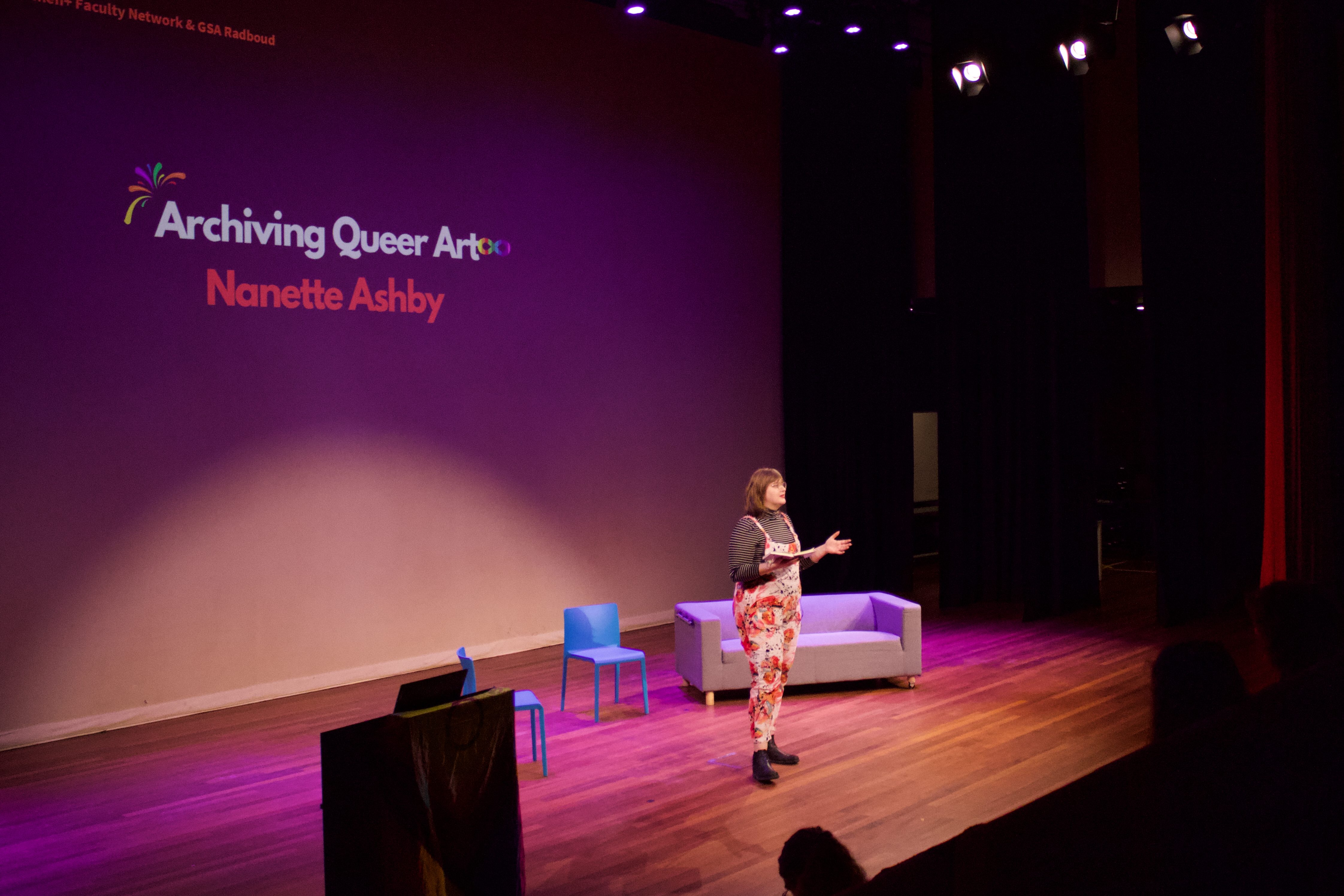
However, we are proud to say that our Editor-in-Chief, Nanette Ashby, contributed as a speaker and panelist in the first part of the event, sharing her research and passion for gender and museum studies. In her talk “Archiving Queer Art”, Nanette explored the complexities of archiving queer art, or categorising and cataloguing specific forms of art as “queer.” She discussed how the difficulties of researching queer art history and the preservation of queer art stem from the foundational issue of tracing the boundaries between queer and non-queer, and imposing the label of “queer” on pieces of art that were created before this label was created. Moreover, Nanette demonstrated that the difficulties in creating museums and exhibitions about queer art history ultimately lie in political and social decisions, further marginalising queer individuals, making most initiatives focusing on the representation and preservation of marginalised communities self-funded or generally reliant upon volunteer work.
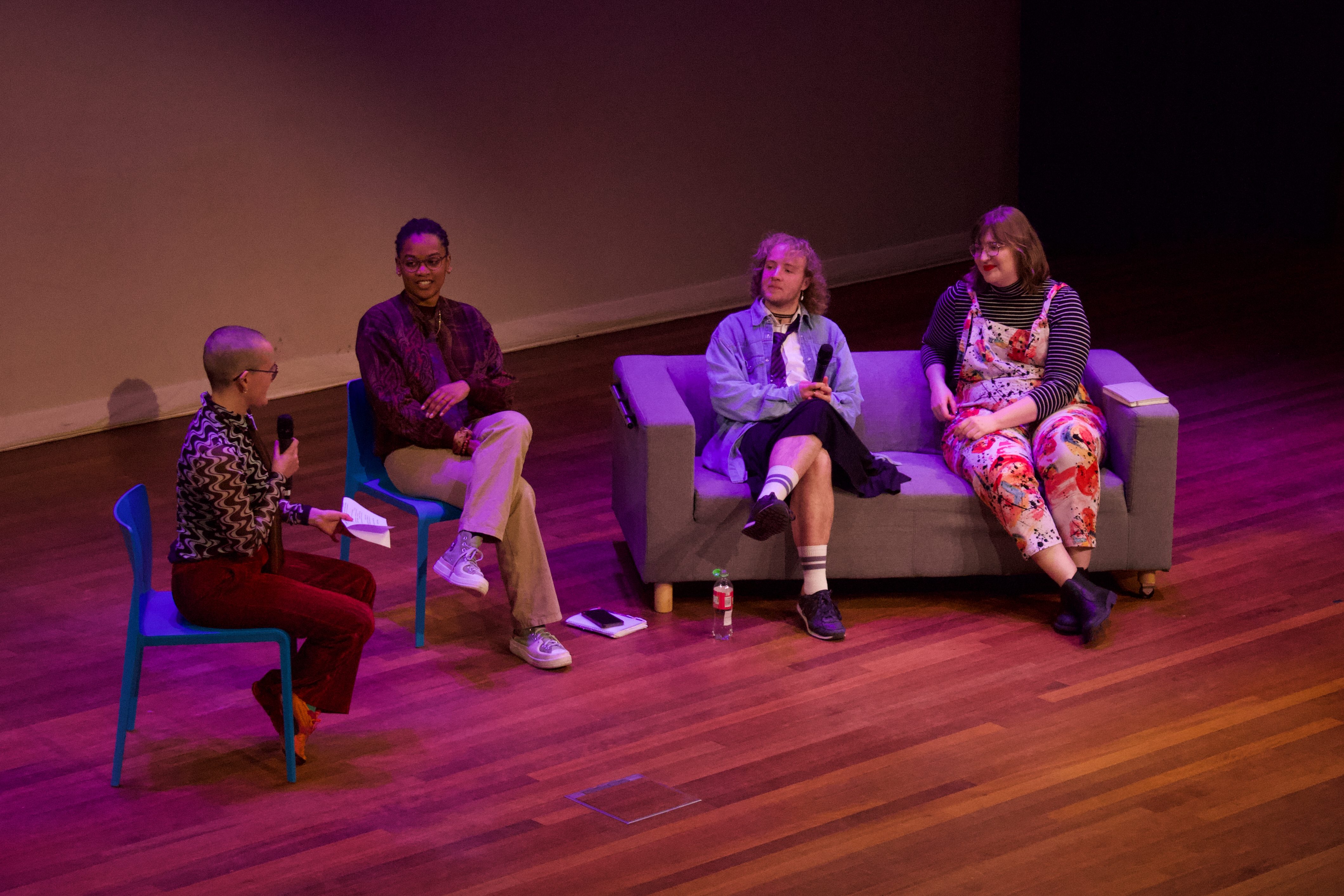
The analysis of these topics was central to launching the panel debate. Ishfarah Esseboom, a former Radboud student, artist and writer, Davian de Kok, assistant producer at the Radboud theatre and poet, and Nanette debated on topics related to queer identity and art. The panelists shared their opinion on what makes art queer, how they relate to their sexual and gender identities, what forms of art are selected to become part of an archive, the difference between physical and digital archives, and the difficulties in funding queer art. Although the panel clearly highlighted the challenges that artists face in relation to combining their queer identity with their work, I could not help but notice that, while attempting to escape normative narratives, stereotypes or commonplaces, the words of the panelists sometimes pointed at quite well-known issues and challenges. In other words, while recognised as a good starting point for those unfamiliar with these issues, it could potentially have gone more in-depth. After the panel about queer art, Ishfarah Esseboom and Campus Poet Jet Sterkman performed a sample of their poetry, providing the audience with an example of queer art.
Considering that very few people showed up to the event, I was pleasantly surprised to see that the interaction with the audience was re-established at the end of the panel. The reasons behind such a low participation in comparison to former additions in 2023 and 2024 are still unclear to me, but I would have hoped to see more people at an event that promotes queer stories and policies within Raboud University, especially since the interest in topics related to gender, equality and inclusivity is so widespread in our community (or, at least, from what I can observe within my circles.) Hopefully, if there is a Queering Radboud 4.0 next year, there will be a chance to gather a bigger audience.
However, the fact that the audience was small made it a great opportunity for everyone to network and connect with people interested in, promoting, researching or specialising in this field. Something noteworthy was the virtually complete absence of individuals involved in the decision-making process at Radboud University, or in positions of power within the university. It was sad to see this event returning to another grassroots initiative, as the ones discussed during the first panel. Don’t get me wrong: you need to start somewhere, but it looks like Queering Radboud has changed a lot from the previous editions!
Closer to university policy was Iris Què’s talk on how to achieve change in the context of diversity, equality and inclusion (DEI). I was personally impressed by how clearly structured and refined the presentation was. In a sense, it seemed to me as if no word was out of place and every single sentence had been carefully thought through. In my opinion, brilliant! The assumption underlying this presentation was that making a concrete difference in DEI is difficult, as moving from knowledge to practical transformation is challenging. By analysing why resistance makes change difficult and what intersectionality can reveal to understand the complexity of specific situations, the speaker encouraged the audience to think about how to achieve meaningful change. In a way, Iris tried to show that DEI stems from an intersectional framework, but change is extremely difficult to achieve in this context because it requires people to confront their identities and their privileges, and to act accordingly. In her opinion, the best way to concretely generate a transformation is to deal with a disorienting dilemma about what to do, to critically self-reflect, to meaningfully engage with other perspectives and, ultimately, to act according to what we learnt. A great combination of factors that will hopefully reshape society at large, and not only workplaces.
During the discussion panel, Iris could discuss with Şeydâ Buurman-Kutsal and Vero Palm how to implement better DEI policies within Radboud University, and how her model could be implemented in reality in our universities. It was interesting and eye-opening to see how practical challenges impact the achievement of real, concrete change. If what we want is to change a system, we must realise that transformation is not just theoretical, but should be applicable to the associated real-world challenges.
After the event, participants and attendees were invited to the Cultuur Café on campus, an opportunity to further connect with fellow scholars, researchers, and like-minded people over intersectionality, queerness, and the importance of furthering inclusion everywhere. I believe it is going to be extremely important to grow this network in the future, in order to make sure that events such as Queering Radboud keep happening at Radboud University. These occasions are not only crucial if we want to achieve solidarity among marginalised groups, but also to show that a change is much needed. In other words, Queering Radboud is a great place to start if we want to make a difference, and I hope it will, in the future, gather a bigger audience and reignite a dialogue with the representatives of Radboud University.

 Raffia