
by Marle Zwietering
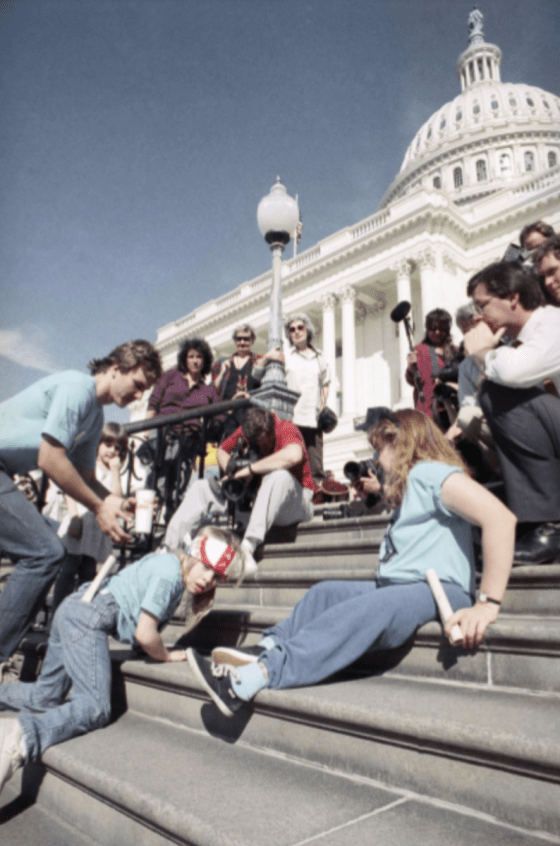
In 1990, over sixty activists of disability rights organization ADAPT left their mobility aids at the bottom of the stairs of the United States Capitol. They then ascended the stairs in a protest now known as the Capitol Crawl.
On gender, diversity, and feminism
by Marle Zwietering
In 1990, over sixty activists of disability rights organization ADAPT left their mobility aids at the bottom of the stairs of the United States Capitol. They then ascended the stairs in a protest now known as the Capitol Crawl.
By Nanette Ashby
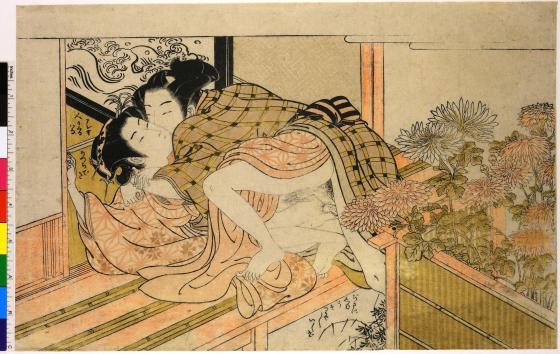
Every fourth search request entered into Google is linked to pornographic content and makes up a third of all internet traffic. Every month, Netflix, Amazon and Twitter combined receive fewer visitors than pornographic websites (Lust). Evidently, just like sex is fundamental for the human experience, so is pornography a part of everyday life. Regardless of the medium or time period, pornography functions as a transmitter of societal ideas and values.

by Nele Brinkmann
In the tumultuous aftermath of World War One, Germany found itself in times of uncertainty and upheaval. The Weimar Republic, Germany’s first democracy, challenged the old order with its progressive constitution and blooming cultural scene. The “New Woman” embodied this transformation and transcended previous gender expectations.

by Nanette Ashby
On an August day in 2022, I walked through the doors of the Montréal Museum of Fine Arts, stepping into the modern entrance hall filled with eager visitors. After a morning exploring the city, I could feel the symptoms of my chronic illness flaring up which made standing in line increasingly painful. This was my first trip since my diagnosis two years ago and I was still coming to terms with the new limitations of my body.
by Rosa Floris
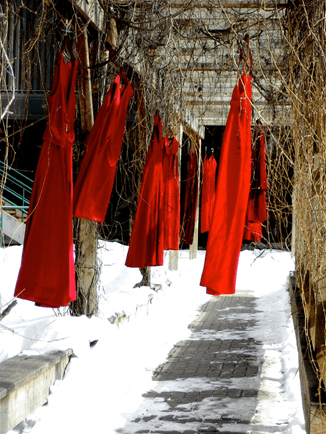
In her 2006 conceptual artwork Cimbra Formwork, Teresa Margolles incorporates real clothes from women who were victims of gendered violence and feminicide in Ciudad Juárez. She is thereby responding to the phenomenon of feminicide, but what exactly does her artwork communicate?

Door Famke Veenstra van Tijdschrift LOVER
“Wat zijn we ver gekomen, hè? Vroeger konden we alleen nog maar liggen,” zeg ik tegen mijn zus als we de eerste grote hal van Musée d’Orsay in Parijs binnenwandelen. Prachtige marmeren beelden van gespierde heldhaftige mannen en hulpeloze horizontale vrouwen vullen de ruimte.
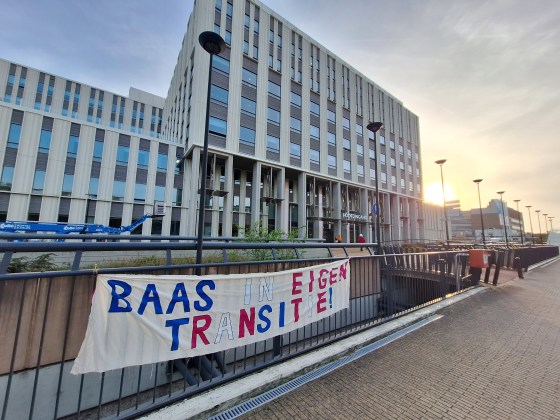
by Plamena Dimova The protest for transgender* rights took place in front of Radboud UMC on the 30th of September, lasted from 7 in the morning until midnight. This is no coincidence. Currently, the waiting time for trans healthcare in the Netherlands is approximately 150 weeks (3 years!), which means 1050 days of waiting – and thus, 1050 minutes of protesting as a form of resistance.

by Alex Banciu The Bucharest Feminist Film Festival took place from September 14 to September 17. It was its third edition. The theme for this year was consent, and each day had its own sub-theme. On the day I was present, the subject was body politics.
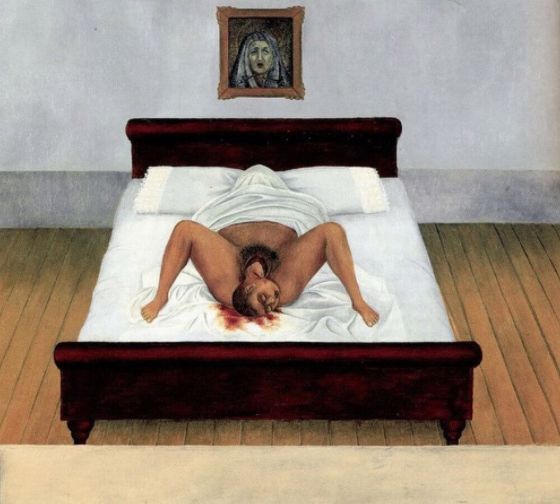
by Nanette Ashby The representation of the pregnant body is a rare theme in visual arts, especially if it doesn’t represent a happy ending. Visualizing the pain and sorrow of a miscarriage is a traitorous endeavour. Miscarriages are, even today, largely taboo even though they are relatively common. Art interrogates and dissects the lived experience.

by Nagham ElRawi An artist’s canvas has always been known to be their voice and their free form of expression, often serving as a reflection of social and cultural conditions in which they exist. As a result, their art becomes a gift, a voice, and a mic connecting them to world speakers. Unfortunately, many parts of The Middle East have resorted to silencing opposing voices which sadly leads to their amplification elsewhere. One of the most current exhibits of this phenomenon is the Afghan artist, Kubra Khademi who has recently made several headlines with her current exhibition at The Eric Mouchet Gallery.

Curated by Girls is a Berlin based art collective that seeks to challenge the contemporary stigmas surrounding womanhood. Curated by Girls aims to destabilize the norm by showing us a new femininity, fused with progressive ideals and new imaginaries.

Which types of characters populate the fictional society of Dutch literature? When thinking about literature in terms of demographics, questions arise with regards to the literary representation of certain social groups. Why are certain professions for characters in recent Dutch novels so popular? And what does that say about the potential emancipatory and progressive powers of literature?
 Raffia