
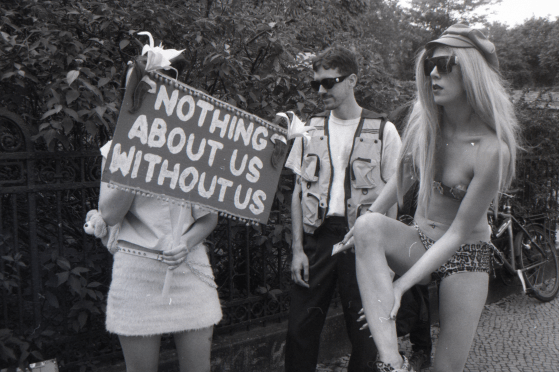
Vic Porter, Nothing about us without us (Nichts über uns ohne uns), 2019 © Vic Porter

Celebrating International Whores’ Day from the streets of Lyon to Berlin: The fight for Sex Workers’ rights is far from over

by Nanette Ashby
Lyon, France, 2nd June 1975. More than 100 sex workers occupied the Saint-Nizier Church demanding to have their voices heard. They insisted on the release of ten sex workers who had been jailed for solicitation just days prior, as well as the cessation of police harassment, fines, abuse and stigma attached to their work.
Mädchen in Uniform: A Masterful Portrayal of Female Solidarity against Oppression

by Airin Farahmand
If you ask a film enthusiast about the most prominent interwar German movies, you will most likely get a German expressionist movie as an answer. After all, in most scholarly books, German cinema is often remembered by Fritz Lang’s iconic movies such as The Metropolis, Nosferatu, and The Cabinet of Dr. Caligari.

The New Woman: Icons of Change or Catalysts of Male Anxiety?

by Nele Brinkmann
In the tumultuous aftermath of World War One, Germany found itself in times of uncertainty and upheaval. The Weimar Republic, Germany’s first democracy, challenged the old order with its progressive constitution and blooming cultural scene. The “New Woman” embodied this transformation and transcended previous gender expectations.

Fascism Goes Female: Why women join far-right groups

by Alex Banciu
Fascism seems to be thrown around everywhere these days, so much so that it almost becomes a term for everything that is on the right side of the political spectrum. Surely, there are cases when this term fits perfectly. Europe’s current political landscape is shifting right at an ominous rate. Therefore, it is now a good time to understand why this is happening and what are the factors fueling this shift. But why exactly feminine fascism?