
by Martine Mussies
A museum named Fenix promises rebirth. I expected flames, wings, ascension. Instead, I encountered porcelain treaties thin enough to fracture at a touch, documents that regulate belonging, and images of movement structured by permission. It did not feel uplifting. It felt suffocating. That heaviness, however, is not incidental to the exhibition. It is its ignition, its method and its primary mode of argument.
Fenix does not narrate migration; it stages it as ambient.
At the time of my visit (spring 2026), Fenix Museum presented a constellation of installations, archival materials, and participatory objects organised around migration as lived infrastructure rather than historical event. Spread across interconnected gallery spaces, the exhibition moves between legal documents, linguistic tools, speculative artworks, and embodied encounters with borders. Rather than offering a linear historical narrative, Fenix stages migration as a condition structured by administration, waiting, and uneven permission. The visitor moves through this logic spatially as much as intellectually.
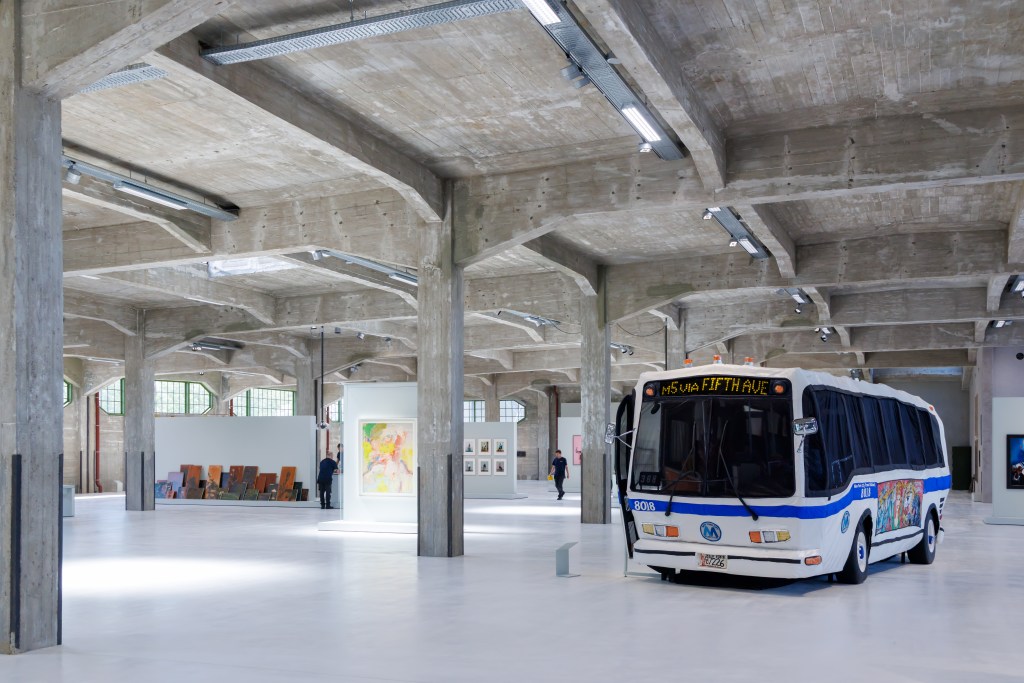
The exhibition is structured through what Sara Ahmed terms affective economies: systems in which emotions do not only reside inside single individuals but circulate in the collective, between bodies, objects, and institutions. Affect, in Ahmed’s framework, accumulates around certain infrastructures (such as passports, alphabets, and borders) and in doing so produces orientations. It does not merely colour experience, but directs what bodies move toward and what they pull away from. Fenix deploys this logic deliberately. Fragility, suspension, and constraint do not merely describe migration; they move through the gallery as experienced conditions. Visitors do not simply observe; they enter an emotional infrastructure that the works have carefully constructed.
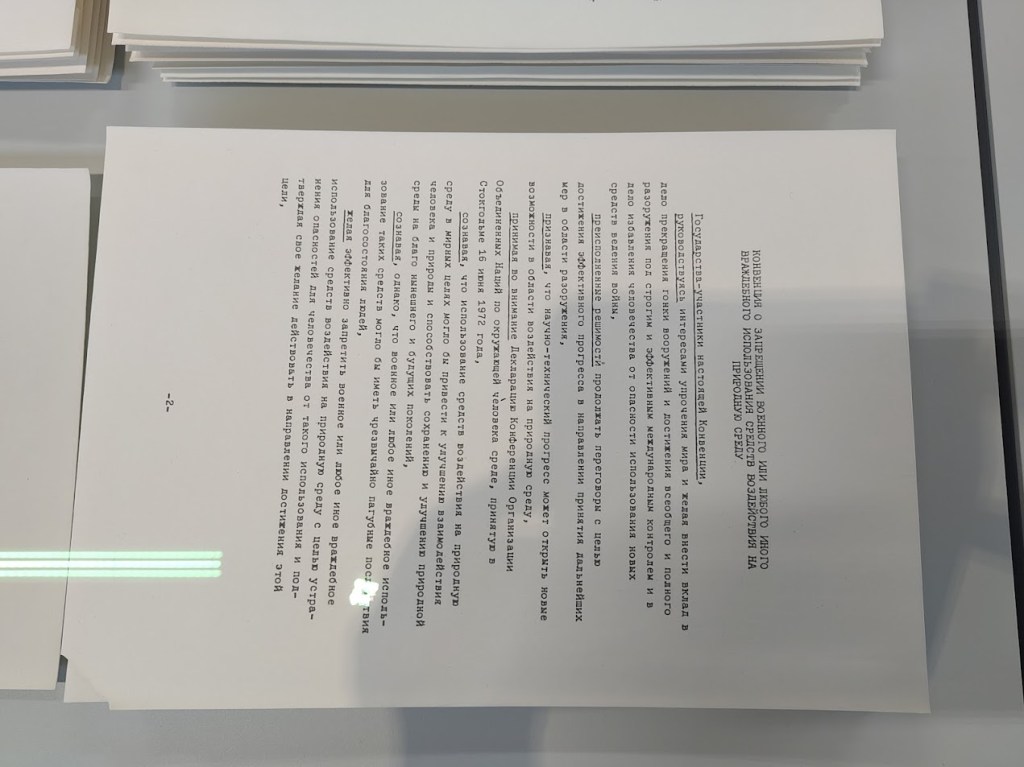
Esther Kokmeijer’s Agreement with Nature makes this immediately legible. In the artist’s work, international treaties are printed on wafer-thin porcelain sheets, each liable to crack under minimal pressure. The work does not symbolise fragility – it materialises it. The treaties’ authority depends on their appearance of permanence, yet their physical substrate reveals how contingent that authority is. What I found myself feeling was: a reluctance to touch, an instinct to step back. That, in itself, becomes an argument. Emotion here is not sentiment added onto an intellectual claim; it is the claim, registered through the body before it is processed by the mind.
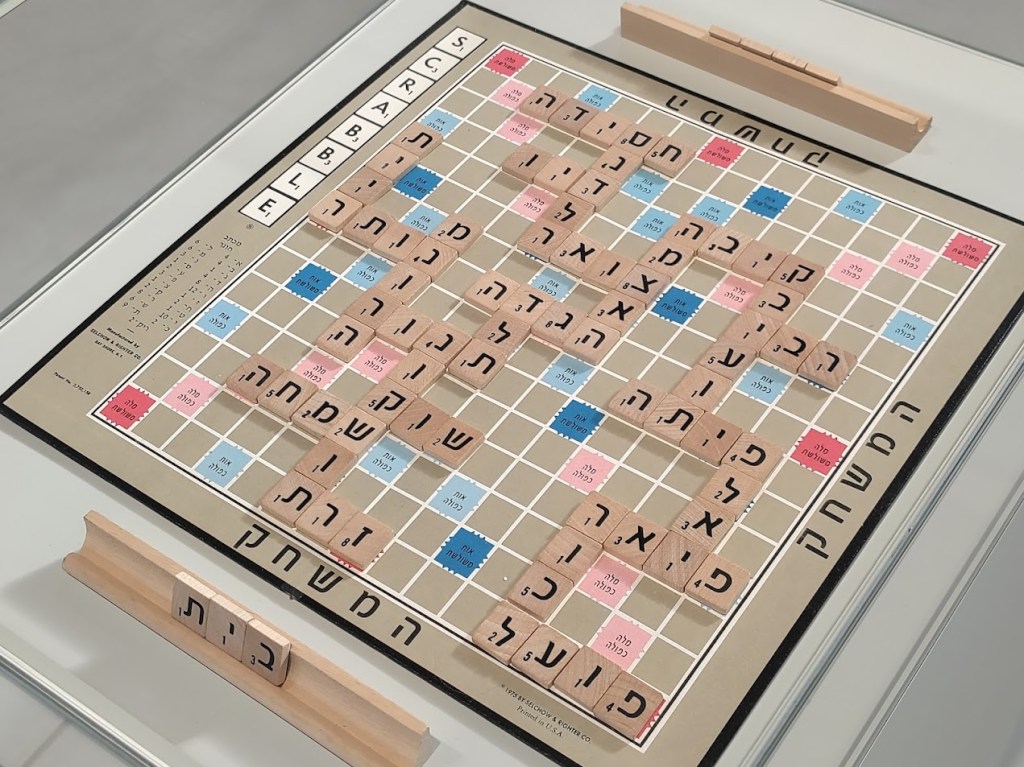
This logic organises the curatorial arrangement. A Hebrew Scrabble set designed to teach migrants a new national language sits within the same conceptual field as archival references to displaced populations. Language, usually framed as a bridge, appears here as an administrative threshold instead. The affect attached to it is ambivalent: hope entangled with evaluation. One does not simply learn to speak, but to qualify. Ahmed’s framework clarifies the stakes: emotions adhere to objects and, through that attachment, orient bodies toward particular futures. What appears as a neutral instrument of inclusion — language, paperwork, instruction — simultaneously operates as a mechanism of selection. Some objects open pathways, but only by filtering who is permitted to move through them.
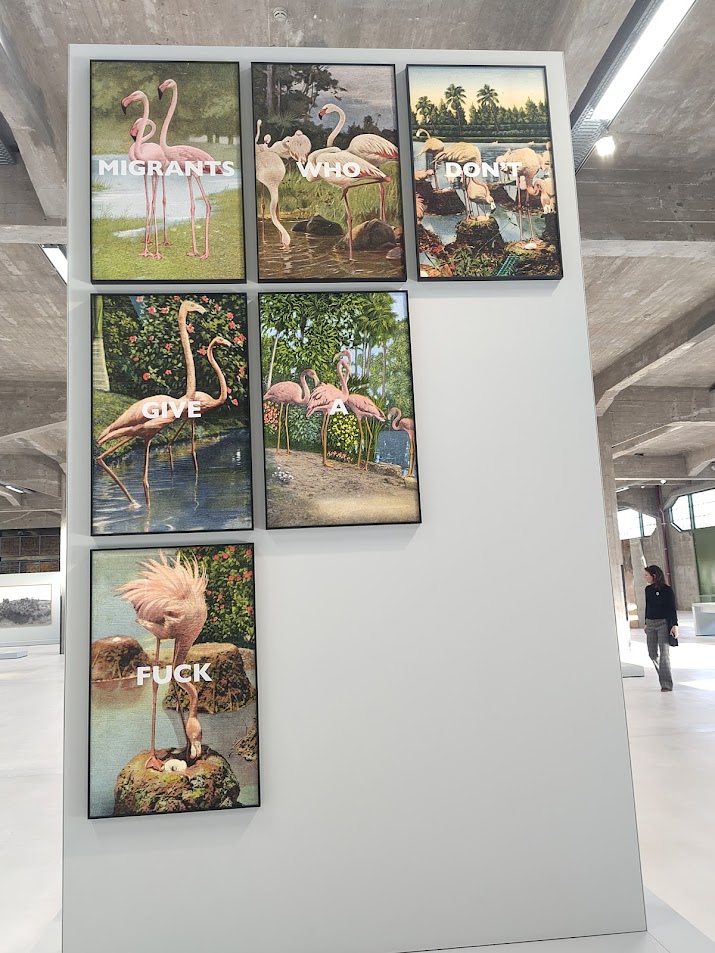
Sharpening this contrast are Kiluanji Kia Henda’s flamingos. The birds move freely across artificial borders, their flamboyance almost comic against the rigidity of geopolitical lines. Positioned alongside works concerned with (un)permitting documentation, they expose mobility as a differential allocation rather than a universal condition. The flamingo becomes more than an image of movement: it embodies mobility unburdened by the administrative architectures that organise human passage. It is here that Rosi Braidotti’s concept of the nomadic subject becomes useful, not as a romantic metaphor for freedom, but as a figure for movement that unsettles fixed territorial and political identities. In Fenix, however, that nomadic figure splits in two: nonhuman movement appears effortless, while human movement remains contingent on surveillance regimes and bureaucratic time. The distinction is not philosophical but administrative, and the gallery makes it visible through contrast rather than explanation.
The affective and differential mobilities staged in the preceding works culminate in a more explicitly political question: who has the right to move, and under what conditions? It is here that the exhibition’s invocation of Hannah Arendt deepens the institutional frame. In We Refugees (1943), Arendt rejected the label refugee because it reduced individuals to a condition defined by exclusion from political membership. Her argument anticipates the paradox she would later theorise more fully: rights exist only where there is a polity willing to guarantee them, yet refugees are precisely those expelled from such a polity. To be displaced is therefore not only to move through space, but to be suspended outside the juridical structures that make rights actionable. If Ahmed helps us understand how migration is felt, and Braidotti how mobility is unevenly distributed, Arendt clarifies the political stakes of that unevenness: movement without recognised membership is movement without enforceable rights. The works surrounding this reference return to that insight consistently: displacement is experienced as suspension within legal time, not merely as distance travelled. As Moesson recently noted in its discussion of Fenix, migration in the Dutch context cannot be disentangled from colonial histories of departure, return, and forced resettlement. This historical layer sharpens the exhibition’s contemporary politics of mobility by situating them within longer imperial infrastructures.
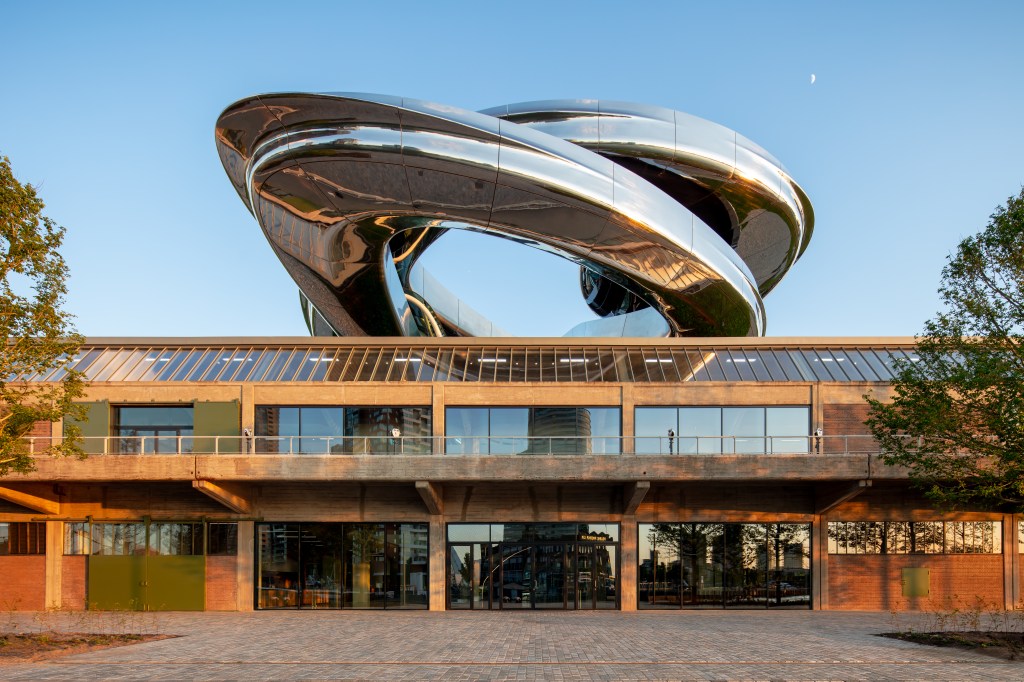
It is worth pausing to consider what kind of institution Fenix Museum positions itself to be. Opened in May 2025 as the world’s first art museum dedicated entirely to migration, it carries both symbolic ambition and institutional responsibility. Its director, Anne Kremers, has stated explicitly that the museum does not intend to tell visitors how to feel about migration, but rather to enrich their perspective on it. That claim to interpretive openness, however, sits in productive tension with the exhibition’s carefully calibrated affective architecture. Museology usefully distinguishes between epistemological neutrality, the refusal to prescribe interpretive conclusions, and affective neutrality, the refusal to steer emotional response. Fenix may reasonably claim the former; it conspicuously does not practice the latter. This is not a contradiction to resolve, but a tension the institution actively produces. For a museum that insists it will not tell visitors how to feel, it constructs feeling with remarkable care and precision. The result is an exhibition that asks for interpretive autonomy while simultaneously shaping the emotional conditions under which that autonomy is exercised. Whether this tension ultimately strengthens or complicates the museum’s project remains an open question, and one the institution might benefit from addressing more transparently.
The spatial design participates in this complexity. The café is embedded within the exhibition path, its ambient noise spilling into the galleries: cups clinking, chairs shifting, voices overlapping in conversation and laughter. This acoustic layer does not merely distract; it reorganises attention, making the exhibition itself an embodied negotiation of proximity and interruption. For visitors sensitive to sensory input, including neurodivergent visitors or those whose own histories make unmediated encounters with this material difficult, the soundscape introduces a physiological tension that mirrors, but can also intensify, the thematic tensions of the works.
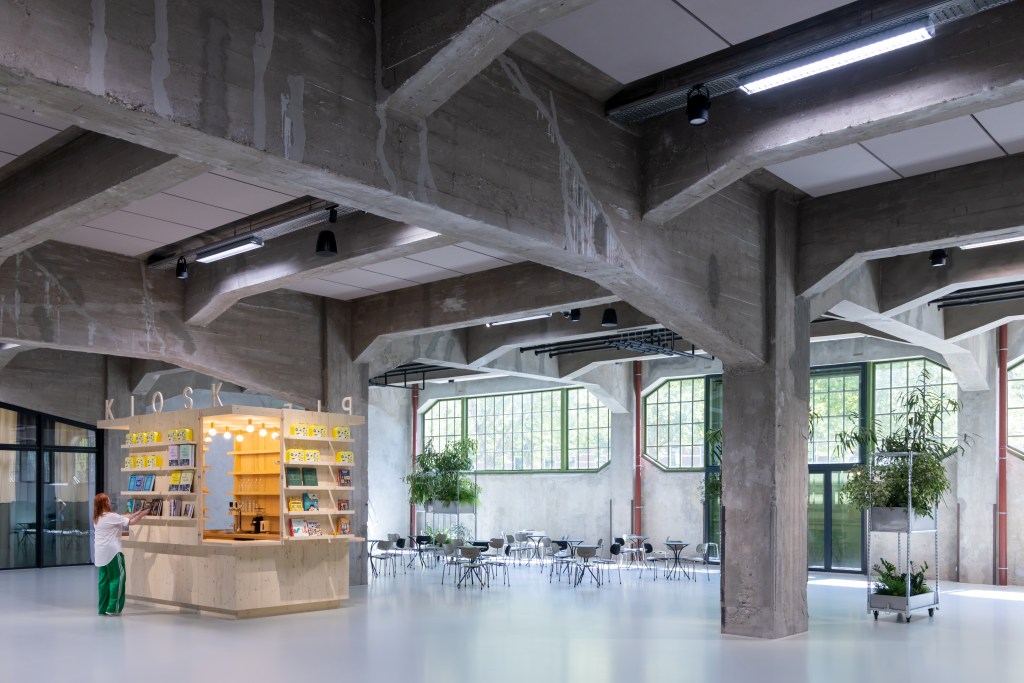
As an autistic visitor, I move through such spaces with a heightened sensitivity to sound, for whom ambient noise is not background but force. Yet sensory vulnerability does not erase structural privilege; it coexists with it. As an EU passport holder, my movement across borders is rarely questioned, and my documents function less as barriers than as instruments of passage. I was reminded of this at the border between Armenia and Iran, where I watched others wave to loved ones they could not reach while I was waved through with little more than a passport and a headscarf; only the rented Lada remained behind, a small reminder that even permitted movement operates by degrees.
These experiences are not equivalent, nor should they be. But together they structure the position from which I encounter Fenix: sensorily vulnerable, institutionally privileged. The museum did not simply present migration to me; through contrast, it exposed the infrastructures that render my own mobility largely unremarkable.
Joan Tronto’s feminist ethics of care offers a useful evaluative framework here, reminding us that environments are themselves affective infrastructures: not only the objects on display, but the sequencing of works, the spatial layout, and the sensory conditions through which visitors move. These elements distribute attention, ease, and access unevenly, shaping who can remain comfortably engaged and who must endure. In a museum context, care does not require comfort or consolation; it can take the form of pacing, moments of sensory relief, spaces for reflection, or curatorial acknowledgement of emotional fatigue. Fenix Museum’s refusal to console is intellectually rigorous, rejecting the familiar sentimental arc in which suffering is redeemed through uplift. Yet that refusal also risks neglecting its responsibility toward visitors for whom unmediated confrontation is not clarifying, but depleting. Radical honesty and institutional care are not mutually exclusive; the most ethically ambitious exhibitions attempt to sustain both at once. Fenix gestures toward that balance without fully achieving it, and the gap between intention and realisation may be the most instructive thing the museum currently offers.
Seen through this lens, the museum’s title becomes less metaphor than diagnostic. A phoenix signifies renewal, but renewal is not depicted inside the galleries. What is shown, instead, are the conditions that make renewal structurally difficult: fragile treaties, conditional language, stratified mobility, suspended rights. The exhibition does not represent transformation. It maps the systems that determine who is permitted to transform at all.
Martine Mussies is an artistic researcher and autistic academic, whose work moves between media studies, neurodiversity, and cultural philosophy. Through writing, music, and visual art, she explores affect, embodiment, and access, often bringing academic theory into dialogue with personal experience. www.martinemussies.nl
Works Cited:
Ahmed, S. (2004). The Cultural Politics of Emotion. Edinburgh University Press.
Arendt, H. (1943). We Refugees. Menorah Journal, 31(1), 69–77.
Braidotti, R. (2011). Nomadic Subjects: Embodiment and Sexual Difference in Contemporary Feminist Theory (2nd ed.). Columbia University Press.
Fenix Museum. (2025). Exhibition materials and curatorial texts. Rotterdam.
Scheldwacht, R. (2025, September). Vertrekken en opnieuw beginnen: Een bezoek aan het
nieuwe kunstmuseum Fenix over migratie leidde tot gemengde gevoelens. Moesson,
70(3), 11–13.
Tronto, J. C. (1993). Moral Boundaries: A Political Argument for an Ethic of Care. Routledge.


