
by Margot Lubbers
“Sometimes I think about him so much, I feel sick,” Lamin says about his son Backary, the smile on his face a stark contrast with the statement itself. Lamin has not seen his son for seven years, since fleeing Gambia to Southern Italy as a political refugee. The Unseen (2026), a first work by Milou Rientjes and Niek Pennings, documents his life and those of two other migrants. Rientjes first came into contact with Lamin while volunteering for an NGO working with migrants in the area. Through him, she was invited into Borgo and into his life. The documentary is situated in Borgo Mezzanone, a ghetto near Foggia in Puglia, and the residence of Lamin, Mbaye, and Babucarr. While viewing this documentary, I was included in their lives for one hour and thirteen minutes.
Borgo Mezzanone and The Backway
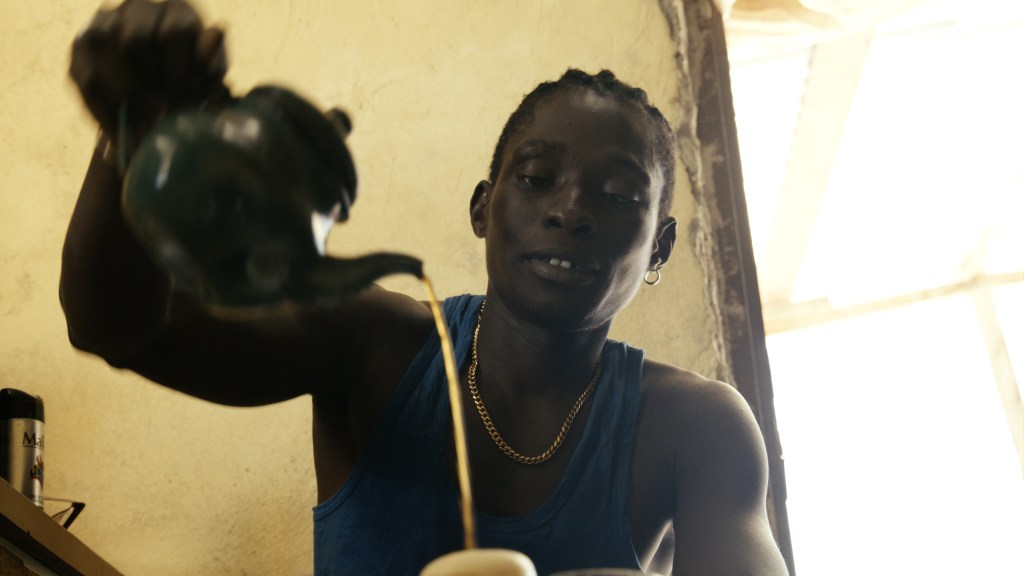
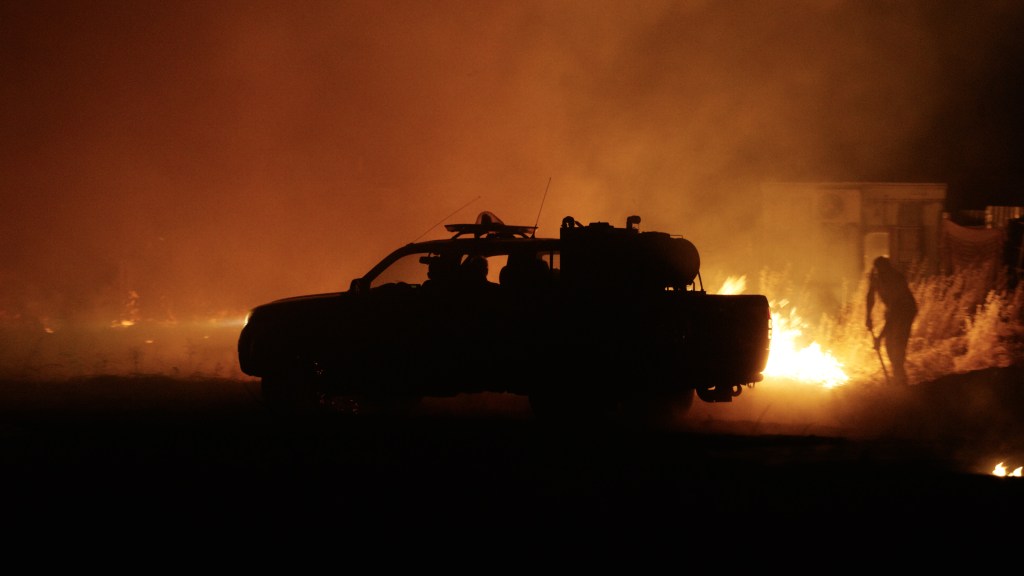
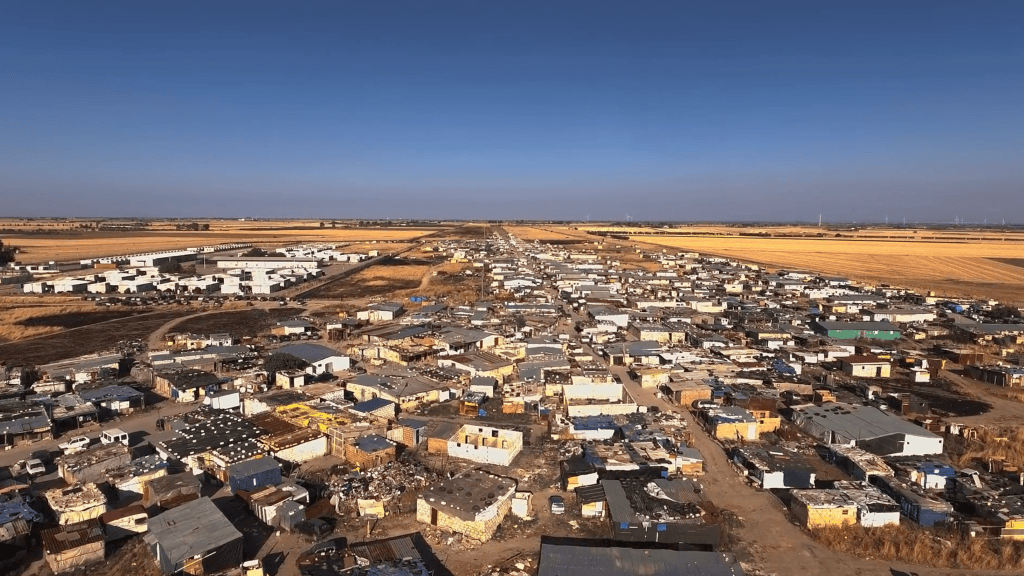
“You are in Europe, but you are in West Africa,” Mbaye and Babucarr say about Borgo more than once throughout the documentary. Borgo is reachable by a twenty-minute walk from the nearest bus stop. It is home to thousands of migrants. Houses in Borgo, often no larger than a small student room, are furnished with second-hand furniture that is clean but visibly worn. Meals are cooked on portable gas stoves. Electricity has been installed with striking ingenuity, but often in ways that are visibly unsafe. Fires occasionally break out, burning down parts of Borgo and sometimes leading not only to the loss of homes, but also to the loss of lives. These fires can start from a discarded cigarette, from gas explosions, from unsafe heating, or from attempts to burn the heaps of garbage that collect in the absence of basic waste disposal.
When one of the fires hits Babucarr’s house, his response is practical: the men focus on what can be done next, like fixing the electricity. Instead of bringing the viewer relief, this practical attitude makes the situation more painfully vivid. It emphasizes that disaster is not exceptional in Borgo, but something that is constantly absorbed and managed with great perseverance and team effort.
Borgo holds many kinds of residents. Lamin is a political refugee. Babucarr and Mbaye are work migrants who came to Europe through what is commonly referred to as “the Backway”: the dangerous route from West Africa through countries such as Senegal, Mali, Burkina Faso, Niger and Libya, in the hope of reaching Europe and building a better life.
The journey to Europe does not end in the life many imagined. Yet returning is hardly an option. The men explain that their families back home often do not know the conditions in which they live. “My parents don’t know that I’m in this type of situation,” Mbaye says. “If I show them that, they will feel bad.” People are ashamed to admit failure because they are in Europe, a place associated with success. When he takes pictures to send home, he goes into the city, so people think he is living well. A social worker in the film explains that returning can mean being viewed as a failure and no longer being accepted.
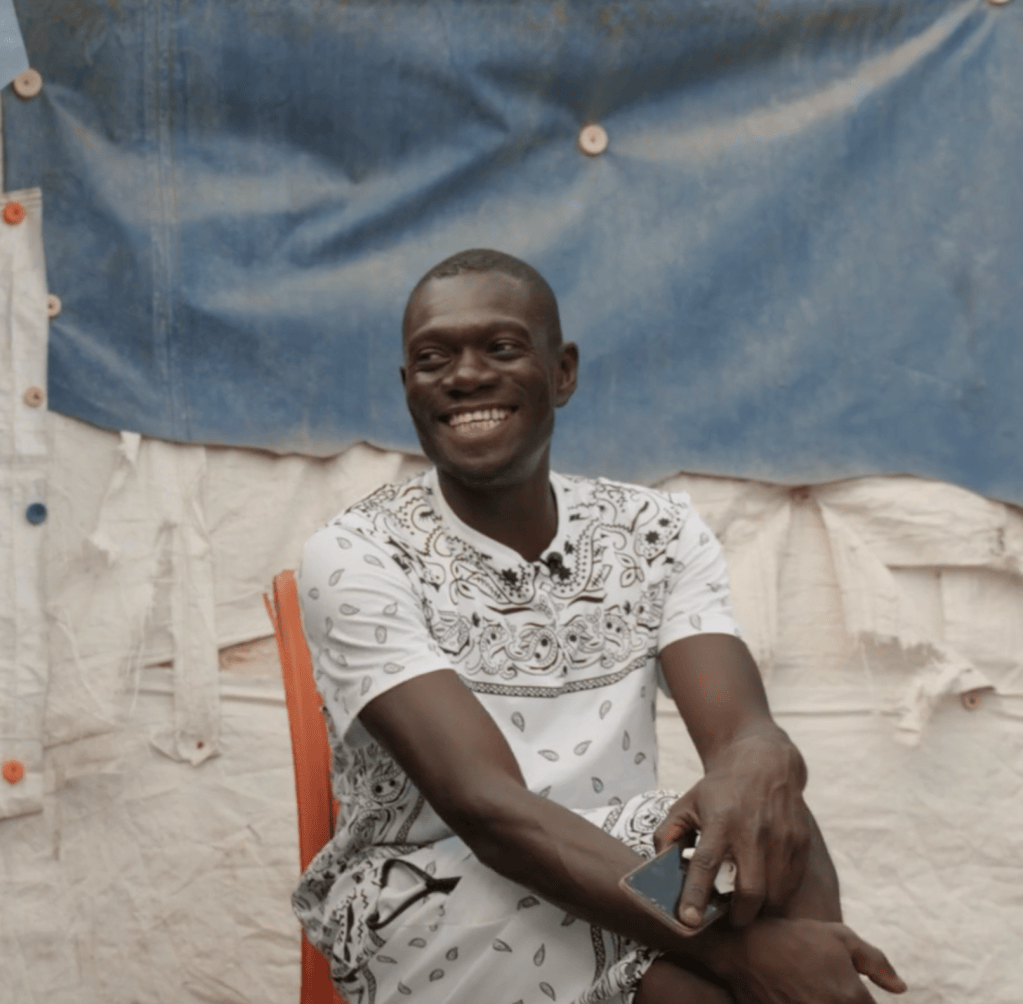
The silence about the conditions of Borgo is part of a larger mythology of Europe. Families, communities, and sometimes entire villages invest money, hope and pride in a person’s journey. Babucarr, for example, had to pay every step of the way to get across borders. “It was a suicide mission. Every day when you wake up you realize ‘today I am alive. Let me hope for tomorrow again,” Babucarr says about his journey to Europe. Libya, he says while laughing, “was the worst”. Once someone reaches Europe, failure becomes almost impossible to admit. The fantasy of Europe is maintained across borders, because the truth would be unbearable for those back home. This is how the romanticized image of Europe remains intact, encouraging others to leave, while those who have arrived find themselves stuck in conditions they cannot disclose.
A painful paradox: Europe’s image and expectations are sustained by those who have fallen victim to it. The simple portrayal of this issue from the migrants’ perspective offers understanding of a cycle that is all too often viewed as one-sided in European political debate. While migrants are portrayed as people who knowingly come to Europe to claim its wealth and opportunities, Europeans are presented as the victims of this migration, bearing no responsibility for the alluring effect of their continent. Yet the men are neither acquiring the wealth they supposedly came for, nor are they free to simply return home. By failing to recognise the cultural and social pressures that prevent them from returning, while allowing the conditions that make their lives in Europe so precarious to persist, European societies are part of the very cycle they so often condemn.
Most residents of Borgo wake up early and travel far and wide to work in the agricultural sector, often without a work or residence permit. This undocumented status of most residents in Borgo makes them vulnerable to exploitation as, without legal papers, workers cannot easily demand contracts. There is no possibility to insist on living wage or report abuse.
It also means they cannot search for work through formal channels. The documentary shows its consequence: the system of caporalato, an illegal recruitment structure in which intermediaries, known as caporali, connect farms to migrant workers while controlling access to work, transport, contracts and payment. The workers do not negotiate directly with farm owners. Instead, they depend on these middlemen who know exactly how precarious their position is. As Babucarr explains, a person can work for an entire month, only to find that the payslip records ten or fifteen days, depending on the type of ‘capo’ he is working with.
Rientjes consciously prefers the term labour exploitation over modern slavery, used in the documentary by an NGO worker. To her, modern slavery implies a more direct removal of freedom referring to when people are imprisoned and have their passports confiscated, meaning that their ability to leave is taken away. The men in Borgo are free to choose otherwise – yet the absence of real alternatives is precisely what makes them exploitable. In reality, no one has to physically force the men to work under bad conditions if every available option leads them back to the same dependency on informal brokers and illegal work. The coercion is distributed across many domains of life for Borgo’s residents: legal status, poverty, and being in close proximity to capos while living in Borgo.
Coercion is also related to market pressure. Italian supermarkets and suppliers have been linked to purchasing practices such as double-downward auctions, in which suppliers first compete by lowering their prices, after which the lowest offer becomes the starting point for a second round of even lower bidding. When tomato paste can be sold for fifty cents a can, the cost of that cheapness has to be absorbed somewhere. This pressure creates incentives to cut labour costs, enlarged by the fact that Italy has no minimum wage. The undocumented workers, those least able to refuse, are the ones who bear the consequences.
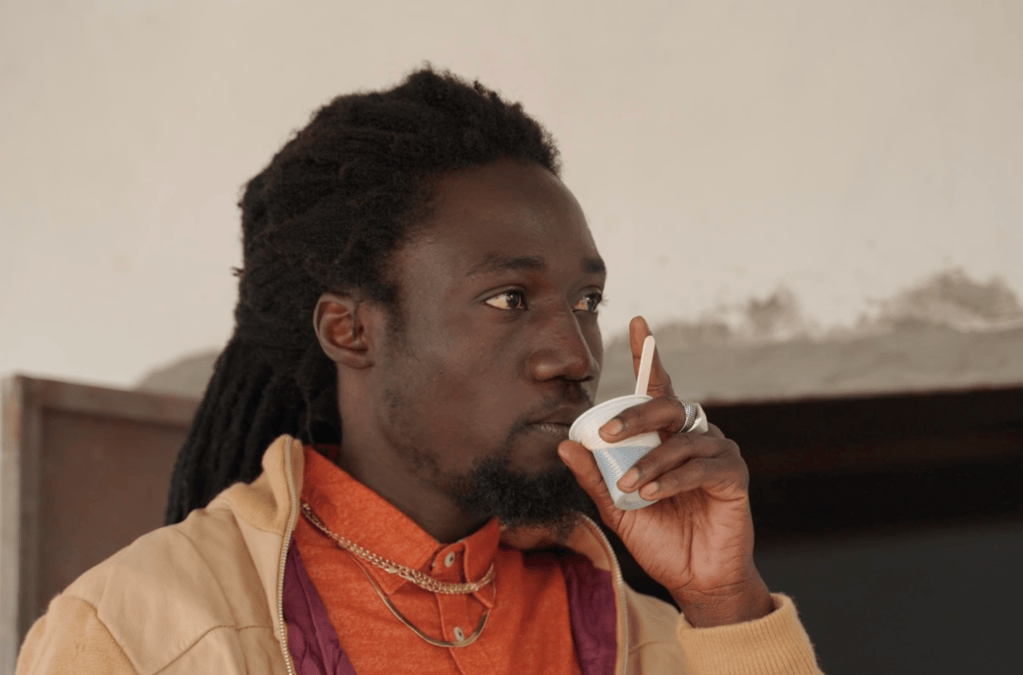
Not only in the agrarian sector exploitation occurs. Mbaye is a musician and artist. “Music is my everything,” he says. “Without music, I will not survive.” His face is hollowed out, his speech slow and controlled. In his case, exploitation firstly appears in the language of artistic collaboration and friendship, to then turn into unfulfilled promises and a cycle of deflection. His coworkers extract his enthusiasm and artistic creativity.
He comes into contact with Italians who invite him to perform and produce African music with them. They promise to help him obtain a work permit in exchange for his labour and collaboration, but after spending four years working and touring across Italy with them that promise has still not turned to reality.
Mbaye shows the camera contents of his phone. There are videos of performances, including one at an anniversary event for the Red Cross. When he recently refused to perform again without progress on his permit, he was bombarded with voice messages urging him to rejoin the band and, when he discloses this, discouraging his plans to travel to Germany. During a call, the cycle of deflection becomes painfully visible: he is moved from person to person, each of whom he has already spoken to. When one acquaintance advises him to seek professional mental help because “they will have to help you,” (as if that is the equivalent of obtaining a legal permit) there is still no concrete answer about the permit. Mbaye lowers his head, runs a hand through his hair, and falls silent. His despair is quiet, but unmistakable. He appears not to be struggling only with his situation, but with the difficulty of accepting what has been done to him.
The power of the mundane
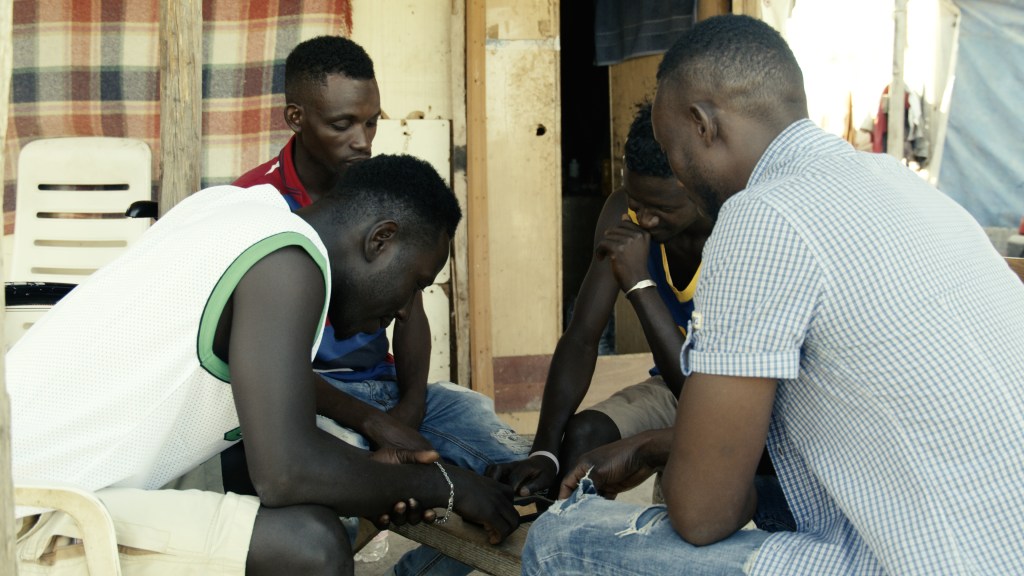
Where The Unseen excels is in making these bureaucratic and economic structures emotionally comprehensible without simplifying them. The documentary’s power lies in the mundane. What draws us in are the ordinary gestures of daily life: brushing teeth, cleaning the house, cooking with friends, doing dishes, turning music on too loudly by accident and laughing while quickly lowering the volume. Through these moments we are invited to join the men rather than merely observe them. The intimacy makes the living conditions feel almost haptic – perhaps the greatest accomplishment of The Unseen.
When interviews take place, it does not feel like watching subjects being questioned. It feels like sitting beside a conversation between friends. The screen between the men and the viewer becomes thinner. The men exist now within your immediate vicinity. It results in the possibility for connection between us and Borgo’s inhabitants. Which is why the injustice lands harder. It is not announced as injustice. It appears beside warmth and humour, making the contrast all the more painful.
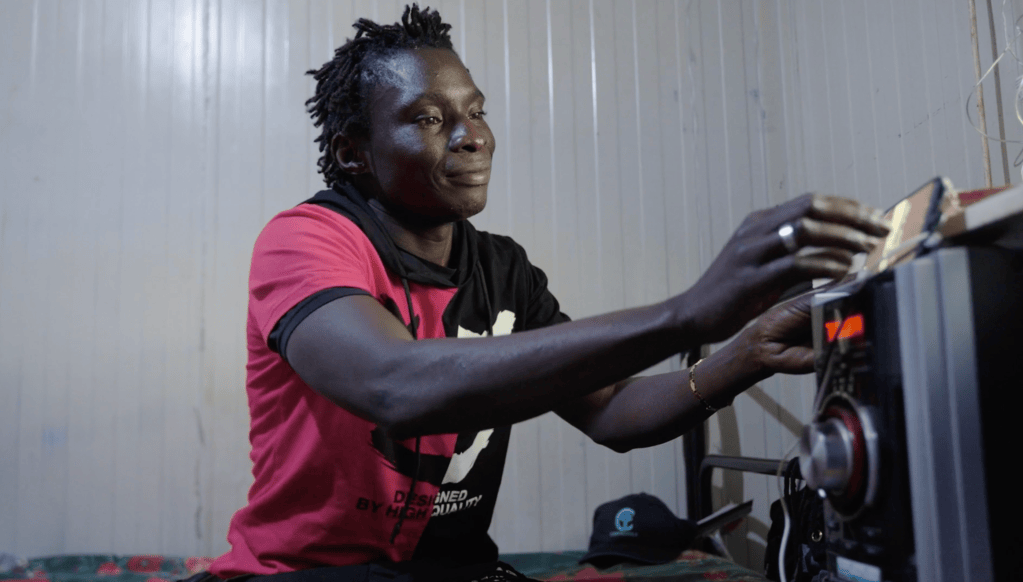
This is how the humanity of Borgo’s inhabitants is not an addition to the political argument, but the method through which injustice becomes visible. The Unseen does not speak in the language of wages, contracts and policy, but in the language of longing, waiting, cooking, laughing, cleaning, calling home, going to work, losing hope, and finding it again. The men are not portrayed as victims of a system, but as people. We laugh at their humor, marvel at their resourcefulness and resilience, and feel exhausted and frustrated from their circumstances. A harsh and unjust system is made tangible not only as a political problem, but as a lived human experience. Rientjes shows people who are often reduced to bureaucratic categories – such as exploited migrant or illegal undocumented — and restores their complexity, by creating the conditions for us to perceive it. By focusing on daily life, The Unseen refuses the distance that often makes suffering easier to process.
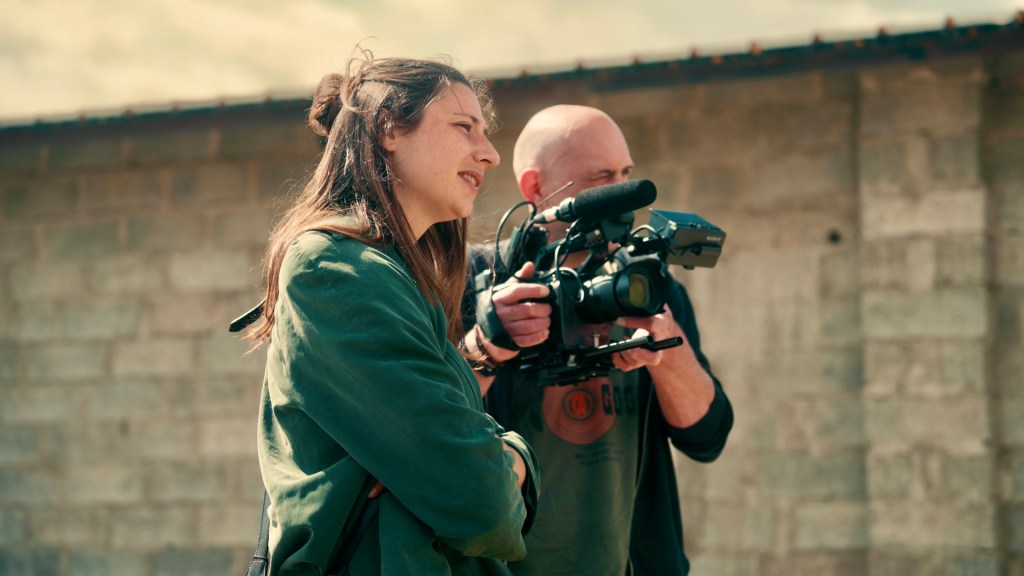
When I asked about how she experienced her role as documentary maker, Rientjes explained that she never really felt she had to choose between being a documentary maker, researcher or friend. She was, first of all, a friend. Her research helped her understand the context and ask informed questions, but the closeness came from trust. That trust seeps into the documentary. The camera is present, but it never feels extractive.
Her approach challenges the traditional ideal of the documentary maker or researcher as an impartial, detached observer. Rather than treating personal involvement as a threat to objectivity, Rientjes embraces it as an essential part of her filmmaking. The intimacy resulting from their friendship allows us to experience something of that same closeness. This is particularly meaningful given the vulnerability of the men she portrays, the quality that makes The Unseen so compelling.
Most memorable, the documentary incites a plethora of emotions, ranging between humour and horror, admiration and shock. The shock comes not from the scandal that these men live in such conditions, but that they can do so while remaining unseen. Especially within a continent that so often imagines itself as the destination of safety and prosperity. In a sense, The Unseen is not only about Borgo. It is about Europe’s ability to look away at what sustains its own comfort. Cheap food, closed borders, informal labour and bureaucratic deflection meet in places like Borgo, where people live in conditions that should be impossible to reconcile with Europe’s self-image.
The Unseen is displayed on:
The 19th of November in Utrecht, at Basecamp
The 20th and 22nd November in Hengelo, at Schouwburg Hengelo
Visit their website for more information and upcoming screenings.
Margot Lubbers is a final-year Master’s student in the Behavioural Science Research Master at Radboud University. She currently works as a student assistant on research into the manosphere and is writing her thesis on the use of emotion in Dutch political social media campaigning. Her broader research interests focus on social media and its effects on group dynamics, particularly in relation to gender and politics.


