by Rosa Floris
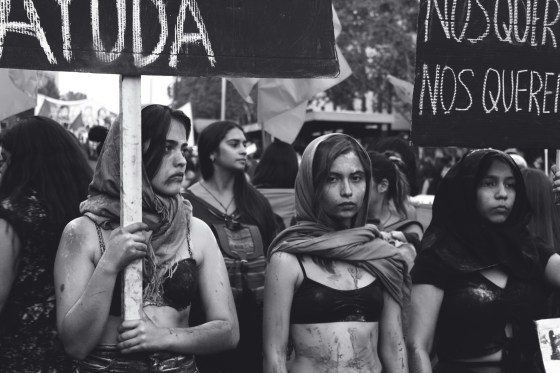
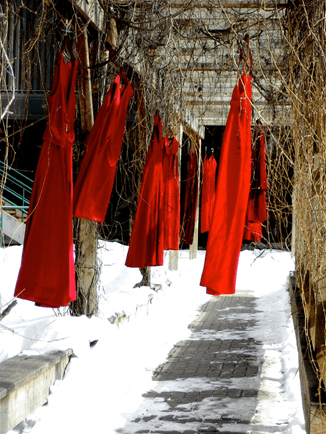
In her 2006 conceptual artwork Cimbra Formwork, Teresa Margolles incorporates real clothes from women who were victims of gendered violence and feminicide in Ciudad Juárez. She is thereby responding to the phenomenon of feminicide, but what exactly does her artwork communicate?
Category: Articles
Gender and cities – How Europe’s Global Cities produce class inequalities between women
by Ava Wood
The woman and the city is a topic of increasing importance, and one which, to me, exemplifies the pervasive nature of the patriarchy, as well as the new and changing ways in which it presents itself. Particularly, with increased globalisation, the phenomenon of the global city is one that requires our attention.
Italy’s Dark Side: The Unseen War on Women in Italian newspapers – The problematic perspectives on femicides in Italian press coverage
by Chiara Palmeri
Outside of Italy, it is not common knowledge that the country of food and marvellous historical monuments is grappling with a silent but deadly crisis: the alarming rise in the number of femicides.
“We fight with research” Femicides in the European Union and worldwide, an overview
by Giulia Ghidelli
In the past years, the phenomenon of femicide has gained increasing space in the news, together with a progressively growing awareness of systemic gender violence matters, such as the gender pay gap, the #metoo movement against sexual harassment in the entertainment world, and structural discrimination.
Squatting for Class Liberation – Labour Day and Nijmegen’s Jantien
By Ava Wood
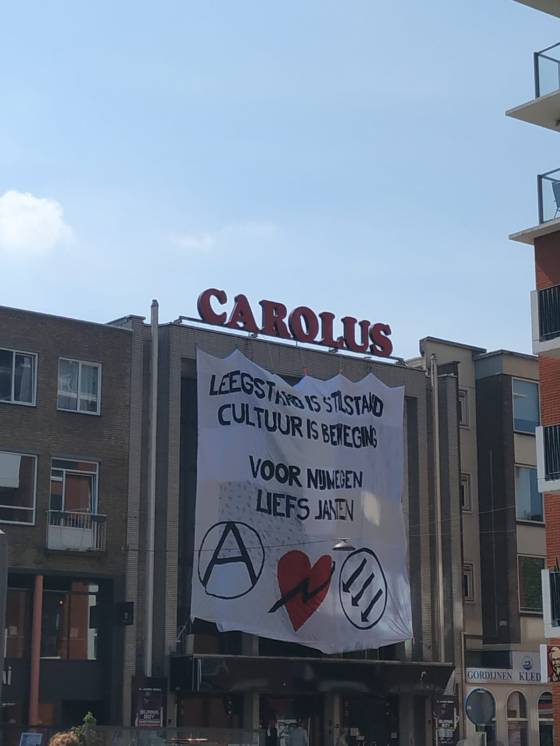
On the first May (Labour Day), a crowd had gathered around a stage on Plein 1944, sun beating hard and loud voices raised in unison, united against capitalism and for class liberation. Protesters sandwiched in between a Primark and a KFC, stark examples of worker exploitation at its best.
“Breaking Borders, Bearing Burdens: The Silent Struggles of Migrant Women on the move”
by Beatrice Pintucci and Wally Twijnstra
According to UNHCR, of the 100 million displaced people worldwide, more than half are women and girls, who bear a disproportionate burden of the challenges associated with migration.
Fascism Goes Female: Why women join far-right groups
by Alex Banciu
Fascism seems to be thrown around everywhere these days, so much so that it almost becomes a term for everything that is on the right side of the political spectrum. Surely, there are cases when this term fits perfectly. Europe’s current political landscape is shifting right at an ominous rate. Therefore, it is now a good time to understand why this is happening and what are the factors fueling this shift. But why exactly feminine fascism?
Eating Disorders Have No Gender
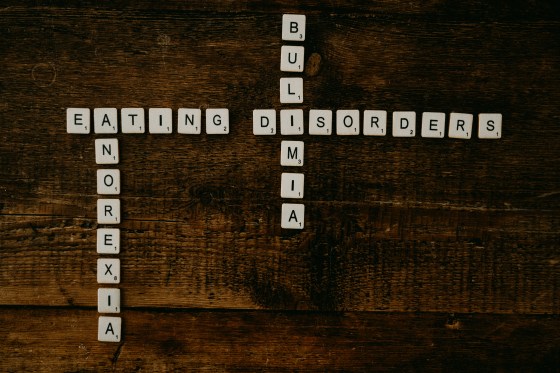
by Chiara Palmeri In our society, there is a strong misconception that eating disorders are predominantly associated with one gender. Whether due to cultural biases or lack of awareness, there is a misguided belief that it is more acceptable for women to exhibit symptoms of an eating disorder than it is for men undergoing the same challenging experiences.
Volop leven en volop liefhebben
by Mylene van der Scheer In deze serie duik ik diep in de boeiende wereld van polyamorie. Samen gaan we op ontdekkingsreis om te begrijpen wat polyamorie precies inhoudt, hoe polyamoreuze relaties eruit kunnen zien, en welke uitdagingen polyamoreuze individuen in het dagelijks leven tegenkomen.
Radboud should boycott Israeli universities. Here’s why and what we can do about it.
In the context of Israel’s ongoing genocide of the Palestinian people, it is more important than ever now to keep talking about Palestine. Even more so – to stop being complicit in the genocide of Palestinian peoples. Hence, this article aims to analyse the role of Radboud University in this context.
Eco-Ableism in the Climate Debate
By Nicole Prevoo When we ask ourselves, “do we have a duty to combat climate change?” or “should we use geoengineering when doing so?” or “can we not just ignore the problem and colonize Mars instead?”, who is this “we” we are referring to?
Why your Feminism should be Socialist – An introduction to Socialist Feminist theory
By Ava Wood On 24th October, Iceland’s women left their workplaces and went on strike, protesting the 10.2% gender pay gap in the country. The movement is inspirational for those of us who come from countries where mobilisation on this scale is unthinkable, and puzzling in the context of the country’s status as the most gender equal in the world (Barry, 2023).