The New Woman: Icons of Change or Catalysts of Male Anxiety?

by Nele Brinkmann
In the tumultuous aftermath of World War One, Germany found itself in times of uncertainty and upheaval. The Weimar Republic, Germany’s first democracy, challenged the old order with its progressive constitution and blooming cultural scene. The “New Woman” embodied this transformation and transcended previous gender expectations.

The fragile ghost of disability: Jannick Deslauriers’ recreation of the wheelchair as fibre art

by Nanette Ashby
On an August day in 2022, I walked through the doors of the Montréal Museum of Fine Arts, stepping into the modern entrance hall filled with eager visitors. After a morning exploring the city, I could feel the symptoms of my chronic illness flaring up which made standing in line increasingly painful. This was my first trip since my diagnosis two years ago and I was still coming to terms with the new limitations of my body.

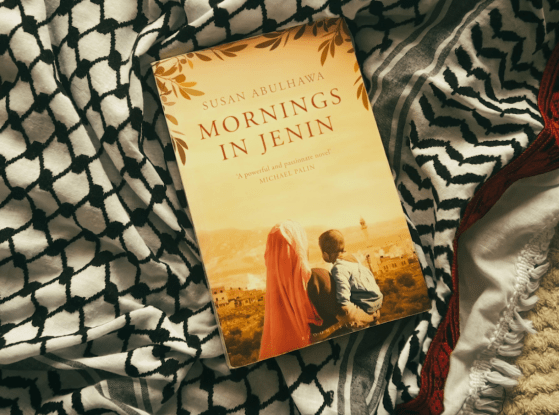
Reading is resistance! Book review – Mornings in Jenin by Susan Abulhawa

by Sorina Bularca
Reading has always been one of my ways to revolt against this fast-paced world. A cup of coffee, some fuzzy peaches (the flat kind), a big cup of water and 50 pages later, I am disconnected from the horror that my room is a mess, and that I should probably be studying. Usually, I like to tell myself that all this reading is going to transform me into a very well-versed person, but the truth is that I still stutter when I try to talk, and I still find it extremely hard to make sentences in which I don’t make grammar mistakes. However, I will not stop.

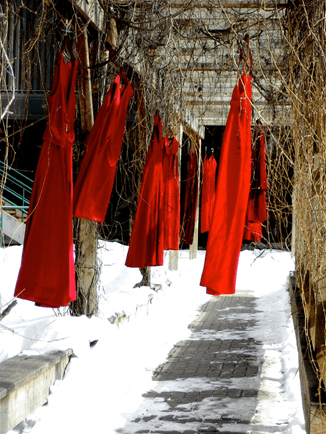
Murdering Clothes: Addressing Feminicide in Teresa Margolles’ Cimbra Formwork 

by Rosa Floris
In her 2006 conceptual artwork Cimbra Formwork, Teresa Margolles incorporates real clothes from women who were victims of gendered violence and feminicide in Ciudad Juárez. She is thereby responding to the phenomenon of feminicide, but what exactly does her artwork communicate?

“Girls just wanna have fun(damental rights)”: A review of Bucharest Feminist Film Festival

by Alex Banciu The Bucharest Feminist Film Festival took place from September 14 to September 17. It was its third edition. The theme for this year was consent, and each day had its own sub-theme. On the day I was present, the subject was body politics.

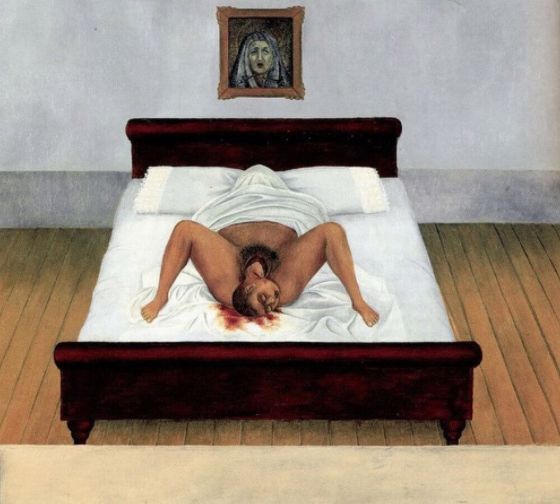
How Frida Kahlo’s representation of miscarriage challenges cultural expectations of women’s bodies – An analysis of My Birth (1932)

by Nanette Ashby The representation of the pregnant body is a rare theme in visual arts, especially if it doesn’t represent a happy ending. Visualizing the pain and sorrow of a miscarriage is a traitorous endeavour. Miscarriages are, even today, largely taboo even though they are relatively common. Art interrogates and dissects the lived experience.

The Silenced Screams of Kubra Khademi

by Nagham ElRawi An artist’s canvas has always been known to be their voice and their free form of expression, often serving as a reflection of social and cultural conditions in which they exist. As a result, their art becomes a gift, a voice, and a mic connecting them to world speakers. Unfortunately, many parts of The Middle East have resorted to silencing opposing voices which sadly leads to their amplification elsewhere. One of the most current exhibits of this phenomenon is the Afghan artist, Kubra Khademi who has recently made several headlines with her current exhibition at The Eric Mouchet Gallery.

Qtopia Art Festival brengt ‘queer’ naar breed publiek

“We’re queer, we’re here, get used to it” is de slogan van de 50-jarige homobeweging die de eerste versie van het Qtopia Queer Arts Festival op bijna 20 locaties voortzet door middel van onder andere exposities, performances en film. Het Nijmeegse festival brengt twee diffuse termen bijeen – queer en kunst – met als doel meer awareness en acceptatie te generen over dat wat anders is, zo vertelde Yette Rohde afgelopen zondag in haar kunstatelier.